Shock Testing
What is Shock Testing?
Shock testing assesses a product’s ability to survive a transient event where extreme rates of force are introduced with respect to time, resulting in a sharp transfer of energy through a system. A mechanical or physical shock can be caused, for example, by impact, collision, drop, bump, earthquake, or explosion.
Shock testing of products and materials determines to what degree items can physically and functionally withstand that would be encountered in handling, transportation, and service environments.
Mechanical Shock Testing
A mechanical shock test can determine the suitability of a device for use in equipment that is subjected to moderately severe shocks from rough handling, transportation or field operation. Unlike impact testing where the event is uncontrolled, a mechanical shock test defines the pulse’s shape, duration, and amplitude.
Mechanical shock tests include:
Pyro-shock — Pyro-shocks are often encountered in spacecraft flight when rocket booster stages are separating and in military applications when weapons are being fired or ordinances are being detonated.
- Drop Testing— this occurs up to 80ft (24m) for testing the resilience of items against mishaps that could happen during transportation, handling, and expected use.
Read More
- Classical Shock – A shock pulse can be characterised by its peak acceleration, the duration, and the shape of the shock pulse (half sine, triangular, trapezoidal, etc.). An electrodynamic shaker can generate many classical pulse shapes and can be a cost and time-efficient option for a routine test.
- Complex Shocks : Shock Response Spectrum (SRS) and Pseudo Velocity Shock Spectrum (PVSS) – SRS tests are designed to re-create complex pulses. Many synthetic pulses can represent a complex transient waveform with a frequency response comparable to the operational environment.
- Free-fall and variable force test techniques —These techniques produce shocks up to 15,000g (147,000 m/s2).
- Impact Testing Item is fixed and the shock device is an impactor that is dropped from a certain height (hammer, pendulum).
- Real-life shock data – It is also possible to replicate a signal from a recording and process it using an iterative shock control loop to generate and control the complex waveform.
- Operational shock and crash safety – This shock test verifies that the equipment will continue to function within performance standards after exposure to shocks experienced during normal operations. It also check that certain equipment will not detach from its mountings or separate in a manner that presents a hazard and sort of crash or collision.
- Sine burst – used for strength testing of aerospace hardware as an alternate to static pull and centrifuge tests.
- Sine beat – The testing industry uses synthetic pulse types, and the sine beat pulse type is common in earthquake testing.
Resonates team of experienced engineers perform testing to a variety of industrial and military standards, including RTCA DO-160, MIL-STD-810, DEF STAN 00-35, and EN 60068. Our engineers can also support complex or custom projects by assisting with prototype and product development or specification selection.
Instrumentation and fixturing
Instrumentation, such as accelerometers, strain gauges, load cells, can be used to measure the device’s response during testing. Multi-channel data acquisition systems produce wave shapes and spectrum presentations using this sensor data.
Tooling or bespoke fixtures are generally required to attach a component to the shock testing equipment. At Resonate Testing we can help you with the best approach to fixture your test item to our equipment and allow for adequate instrumentation.
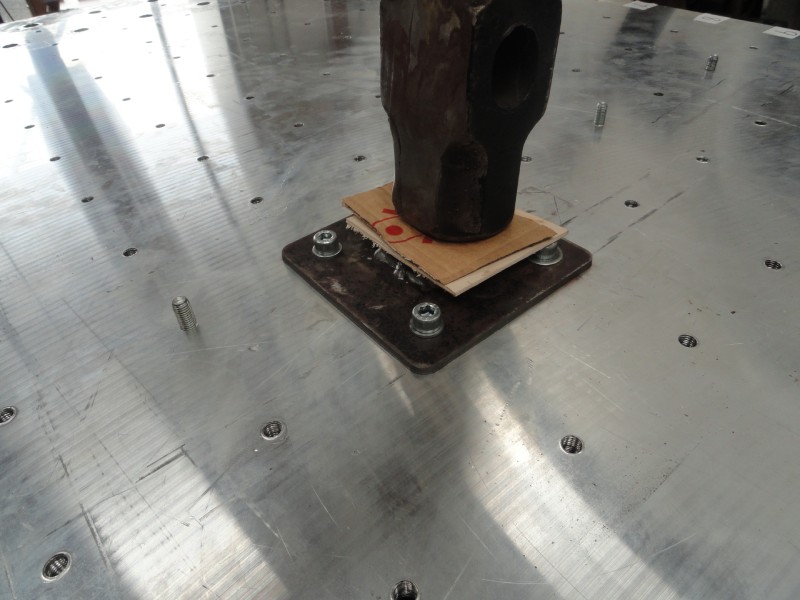
Complex Shock Testing - Shock response spectrum (SRS)
Although most classical shock pulses are defined in terms of acceleration, the main purpose of a shock test is to generate a change in velocity and inspect its effect on the product.
The shock response spectrum (SRS) is a plot of the maximum responses of imagined single-degree-of-freedom systems versus their natural frequencies as they respond to an applied shock.
SRS is calculated function based on an input transient. It allows characterising of the shock effect on a dynamical standardised system in order to estimate its severity or its damaging potential. Thus, it allows us to compare shocks with each other or to establish equivalence criterion between a measured transient environment and a laboratory simulation of that transient environment.
SRS was specifically developed by the Defence and Space Industry as a more realistic way of testing the shocks specific to those they might encounter such as booster rocket separation, explosions etc.American military standard for shock testing (MIL-STD-810) states that SRS should primarily be used in these cases and classical pulses should only be considered as a last resort.
All these intended shocks have the same characteristics as the required pulse in that they contain a high G level in a very short duration (a lot of energy rapidly transferred).
Resonate Testing uses SRS testing to recreate a pulse that is technically equivalent to the initial test requirement in terms of damage potential to provide the same level of test assurance.
How can Resonate Testing help you?
Resonate Testing successfully designed, developed and commissioned a shock test system to achieve the high G and short duration short typical of rocket launches, gunfire etc. The SRS system allows us to test to the levels and profiles required, utilising a combination of gravity, high density hammers and resonant fixture base plates.
Resonate Testing’s development of a flexible shock test facility will assist space companies to shorten their development cycles from prototype tests to full space qualification test campaigns.
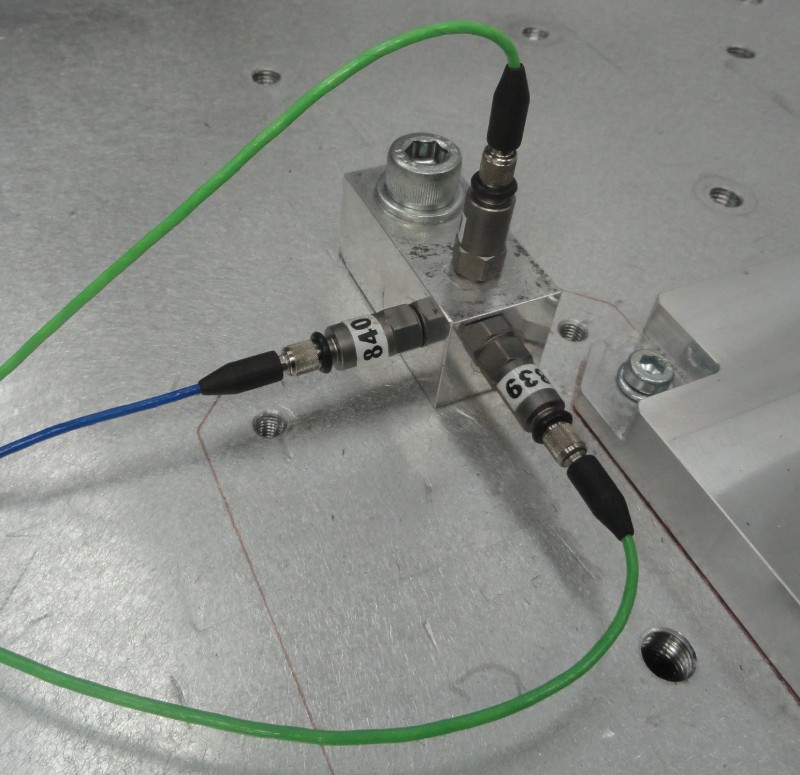
Shock & SRS Capabilities (Often Paired with Vibration)
Alongside vibration, we provide advanced shock and SRS (Shock Response Spectrum) testing to replicate demanding high‑energy environments.
We generate:
- Classical shock
- Complex SRS shock
- Pyroshock‑style high‑frequency transient events
- Multi‑axis shock pulses
- High‑G transient profiles with tight tolerances
These capabilities are frequently used in satellite, launch vehicle, aerospace, and high‑reliability defence programmes requiring accurate replication of shock environments.
Read More
Engineering Support Throughout
Fixture Design & Fabrication
We design and build fixtures in‑house to ensure rigidity, accuracy, and repeatable test conditions. Custom fixtures shorten programme timelines and ensure confidence in results.
Instrumentation & Data Acquisition
We tailor sensor and DAQ setups to suit each test article, including:
- Accelerometers
- Strain gauges
- Electrical continuity monitoring
- Functional monitoring during vibration or shock events
Interpretation, Not Just Data
We don’t just deliver data — we help translate it into engineering decisions. Our team supports failure mode interpretation, correlation, corrective actions, and design‑for‑testability insights.
Typical Use Cases
Space & Aerospace
- Launch‑level vibration
- SRS shock
- Full qualification for satellites, avionics, instruments
EV & Automotive
- EV battery packs up to ~2 tonnes
- Powertrain components
- Chassis & steering systems
Battery & Energy Systems
- UN 38.3 transport vibration
- High‑voltage module vibration
- Connector and interface durability under load
Industrial & Consumer
- Ingress‑risk product testing
- Electronics reliability
- Ruggedised industrial and defence equipment
What You Can Expect
Clear Communication
We keep you informed before, during, and after the test, ensuring alignment on requirements, setup, and results.
Fast Problem‑Solving
If adjustments are needed or unexpected behaviour occurs, we collaborate in real time to keep your programme moving.
Reliable Reporting
You receive accurate, traceable, and ISO 17025‑aligned reports — delivered quickly and clearly.
Ready to Test?
Bring us your specification. Bring us your challenge.
We’ll help you move faster — with vibration testing you can trust.