
© 2026 ResonateTesting Ltd.
IP (Ingress Protection) Testing. Design with confidence. Test for reality. Validate before deployment.
Accredited
Scope Available
Programmes
Plus Certified
Expertise
Test Evidence
Dust, water, pressure changes and environmental exposure rarely occur in isolation. Effective ingress protection testing helps verify that enclosures, seals, vents and interfaces continue to protect critical components when products encounter the conditions they were designed for.
Whether your goal is compliance with IEC 60529, validation of a new design, or reduction of field failures, IP testing provides evidence that protection strategies perform under controlled and repeatable conditions. The right test programme helps bridge the gap between laboratory requirements and the environments products experience every day.
IP testing checks whether an enclosure can protect critical components from dust, solid foreign objects, water and other environmental exposure. It helps confirm that seals, vents, fans, joints and protective barriers perform as intended before products face day-to-day operating conditions.
For parts used outdoors, in vehicles, in portable electronics or in harsh operating environments, the test result is more than a rating. It is evidence that the design can reduce contamination, prevent avoidable field failures and support long-term reliability and safety.
First digit: protection against solid objects, dust, dirt and sand.
Second digit: protection against liquid exposure such as dripping water, spray, splashing, jets or immersion.
Application context: the target rating should reflect how the part will actually be used, cleaned, handled and exposed in service.
IP67 and IP68 ratings are commonly relevant where devices need strong dust protection plus temporary or continuous immersion resistance.
IP66 and IP69 performance may be needed where parts face powerful water jets, road spray or high-pressure, high-temperature wash-down conditions.
Common references include IEC 60529 / EN 60529, MIL-STD-810, RTCA/DO-160 and ISO 20653, depending on the product and market.
| IP | Protection against ingress of solid foreign objects | Protection against ingress of water with harmful effects |
|---|---|---|
| IP0X | Non Protected - Non Protected | Non Protected |
| IP1X | ≥50mm diameter - Back of hand | Water vertically dripping |
| IP2X | ≥12.5mm diameter - Finger | Water Dripping (15° tilted) |
| IP3X | ≥2.5mm diameter - Tool | Spraying water |
| IP4X | ≥1.0mm diameter - Wire | Splashing water |
| IP5X | Dust protected - Wire | Jetting |
| IP6X | Dust tight - Wire | Powerful Jetting |
| IPX7 | N/A | Temporary Immersion |
| IPX8 | N/A | Continuous Immersion |
| IPX9 | N/A | High pressure and temperature water jet |
IP ratings are only meaningful when they reflect the environments your product will actually encounter. Whether you need protection from dust, road spray, wash-down procedures, immersion, or challenging outdoor conditions, early ingress protection testing can help identify weaknesses before they become costly field failures.
Testing against realistic exposure scenarios provides confidence that seals, enclosures, connectors and protective features can perform as intended throughout the product lifecycle.
Selecting an ingress protection rating is not always straightforward. The correct test programme depends on how and where your product will be used, cleaned, transported and exposed to environmental conditions. A rating that is too low can leave products vulnerable to contamination or moisture ingress, while over-specification can add unnecessary design complexity and cost.
Our engineers can help you review intended operating conditions, identify relevant standards such as IEC 60529 and ISO 20653, and recommend a practical testing approach aligned with your product objectives and market requirements.
Talk to an engineer early in the design process to gain confidence that your enclosure, seals and protection strategy are appropriate for real-world use.
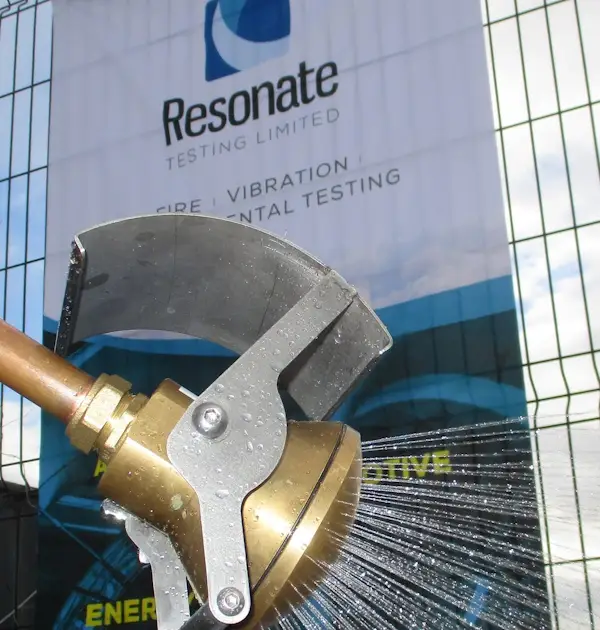
Testing can simulate a wide range of real-world liquid exposure, from light rain through to aggressive wash-down and immersion. Depending on the product, relevant test conditions may include dripping water, spray, splashing water, water jets, high-pressure water jets, temporary immersion or continuous immersion.
Real environments can also introduce liquids beyond clean freshwater. Chlorinated water, saltwater and common spills such as coffee or soft drinks can challenge sealing performance over time, especially where products are handled frequently or exposed to changing temperatures and pressures.
Dust, dirt, sand and other solid particles can enter through small openings, vents or fan paths. Even limited contamination may affect product lifetime by interfering with moving parts, electronics, insulation, cooling or safe operation.
Solid ingress testing is especially important where products operate around construction dust, road debris, workshop environments, outdoor exposure or repeated transport. It helps verify whether protective features are sufficient for the conditions the product is likely to encounter.
IP ratings help designers, manufacturers and buyers understand how well an enclosure resists the entry of dust and water under defined test conditions. The questions below address some of the most common misconceptions and practical considerations when interpreting ingress protection results.
Both ratings require complete protection against dust ingress (the ‘6’ rating). The difference is in water protection. IP67 covers temporary immersion in water under defined test conditions, while IP68 covers continuous immersion under conditions agreed between the manufacturer and test laboratory. Because IP68 requirements can vary depending on the product application, it is important to review the specific test conditions rather than relying on the rating alone.
No. An IP rating demonstrates performance at the time of testing under specific laboratory conditions. Long-term durability can also be influenced by ageing, UV exposure, vibration, temperature cycling, chemical exposure, wear of seals, repeated assembly and maintenance activities. Additional environmental and reliability testing may be appropriate where products are expected to operate for many years in demanding environments.
IP testing is designed to simulate specific environmental challenges in a controlled and repeatable way. While the tests provide valuable evidence of enclosure performance, real-world conditions can involve combinations of dust, pressure changes, impacts, contaminants, cleaning agents, salt spray and temperature fluctuations that may not be fully represented by a single IP test. Selecting a rating should therefore consider the actual operating environment.
Yes. A product may meet the required ingress protection rating but still experience issues if seals are damaged during installation, components are incorrectly assembled, materials degrade over time or operating conditions exceed those used during testing. Design validation should consider the full product lifecycle.
The appropriate rating depends on how the product will be used. A portable consumer device exposed to rain may require a different level of protection than an automotive component subjected to road spray, high-pressure wash-down or dust-laden environments. Choosing an unnecessarily high rating can increase cost and complexity, while an insufficient rating may create reliability risks.
Not necessarily. Higher ratings can require more complex sealing strategies, increased manufacturing controls and additional cost. The best rating is one that matches the actual environmental conditions the product is expected to encounter while supporting performance, reliability and serviceability objectives.
Book thermal vacuum testing for satellites, CubeSats, payloads and space hardware. Use the contact route to share the requirement, test profile, drawings or specification for review.
Whether you’re looking to contact us for the first time or have another testing requirement, we’d love to hear from you.