
© 2026 ResonateTesting Ltd.
Demonstrate the thermal and mechanical performance of battery enclosure materials while supporting battery safety, regulatory compliance, and transport readiness. ADR requirements for European road transport, including Special Provision 376 and P911; UL 2596 testing to assess the fire, thermal, and mechanical performance of battery enclosure materials.
Resonate Testing provides engineer-led battery transportation fire testing, including bespoke procedure development, thermal runaway initiation, instrumentation and reporting aligned with transport requirements.
Programmes can be tailored to transport containers, packaging and enclosure materials, evaluating thermal response, structural integrity and key safety observations during representative battery failure events. The evidence generated can support ADR-aligned projects, including P911 and LP906, as well as wider battery transport and safety requirements.
Battery transportation fire testing evaluates how packaging, containers and protective materials perform during a controlled battery failure event. It can provide evidence that a transport containment system manages hazards such as external flame, dangerous projectiles, excessive external temperatures and loss of structural integrity. The applicable programme depends on the battery condition, transport mode and evidence required.
For damaged, defective or thermal-runaway-prone batteries transported by road in Europe, programmes may be aligned with ADR Special Provision 376 and P911. These containment-focused assessments sit within a wider battery safety and transport framework, so the relevant standards should be established before the test scope and acceptance criteria are committed.
 Battery Testing
 Fire Testing
 Vibration Testing
 Shock Testing
 Humidity Testing
ADR — European road: requirements may include Special Provision 376 and P911 for relevant battery transport scenarios.
UN 38.3: transport-safety testing for lithium batteries.
IMDG, RID and IATA/ICAO: frameworks relevant respectively to sea, rail and air transport.
UNECE R100 and R136: vehicle battery requirements that may form part of the wider compliance landscape.
UL 2596: Test Method for Thermal and Mechanical Performance of Battery Enclosure Materials, supporting evaluation of enclosure materials under thermal and mechanical exposure.
ISTA and ASTM D4169: transport-packaging programmes relevant where distribution hazards must also be assessed.
These frameworks are not interchangeable: applicability depends on the product, battery condition, mode of transport and evidence required.
Transporting lithium-ion and lithium-metal batteries presents unique hazards. Damaged, defective or thermal-runaway-prone batteries can generate intense heat, flames, gas release and projectile hazards. Fire testing provides evidence that packaging materials, transport boxes and containment systems can manage these risks during transportation.
For battery manufacturers, logistics providers and packaging designers, fire testing supports the demonstration of transport readiness by assessing how a containment system performs during a representative battery failure event. The objective is not simply to test the battery itself, but to evaluate whether the complete transport solution continues to protect people, property and infrastructure when subjected to severe thermal conditions.
Safety validation: Demonstrates the ability of packaging and containment systems to manage thermal runaway hazards.
Regulatory evidence: Supports compliance programmes aligned with ADR requirements, including P911 and LP906 transport packaging assessments.
Risk reduction: Helps identify weaknesses in insulation, venting, structural design and thermal protection before products enter service.
Approval support: Generates technical evidence that may be reviewed by customers, certification bodies and competent authorities.
Transport confidence: Provides documented proof that packaging has been evaluated under controlled and repeatable conditions.
Typical assessments focus on external flame containment, prevention of dangerous projectile release, control of external surface temperatures, gas management performance and maintenance of structural integrity throughout the event. These factors are critical when transporting batteries that may be damaged, defective or otherwise considered higher risk.
The applicable route depends on the product, battery condition, mode of transport and evidence required. Relevant frameworks may include:
Standards are reviewed for applicability before scope and acceptance criteria are committed.
| Standard / Guidance | Primary Focus | Typical Relevance to Testing |
|---|---|---|
| UN Manual of Tests and Criteria, Part III, Subsection 38.3 (UN 38.3) | Transport safety testing of lithium and sodium batteries before shipment. | Mandatory testing for most lithium-ion, lithium metal and sodium-ion batteries prior to commercial transport by air, sea, road or rail. |
| IEC 62281 | Safe transport of primary and secondary lithium cells and batteries, including packaging and handling requirements. | Frequently used alongside UN 38.3 to demonstrate transport compliance and support international market access. |
| IATA Dangerous Goods Regulations (DGR) | Requirements for the air transport of lithium batteries and other dangerous goods. | Relevant for manufacturers, distributors and freight forwarders shipping batteries by air. |
| ICAO Technical Instructions | International framework governing the safe air transport of dangerous goods. | Forms the regulatory basis for many airline battery transport requirements. |
| IMDG Code | Dangerous goods requirements for maritime transport. | Required when shipping lithium batteries or battery-powered equipment by sea. |
| ADR | European regulations for the transport of dangerous goods by road. | Relevant to battery shipments across the UK and Europe by road freight. |
| RID | Dangerous goods transport regulations for rail transport. | Applicable where batteries are transported using rail networks throughout Europe. |
| 49 CFR (US DOT) | United States hazardous materials transportation regulations. | Important for battery products entering or moving within the United States. |
| UN 38.3 Test Summary Requirements | Documentation demonstrating successful completion of UN 38.3 testing. | Commonly requested by freight forwarders, carriers, distributors and customs authorities before shipment. |
| IEC 60068 Series | Environmental durability testing including vibration, shock and thermal conditioning. | Frequently used to support transport robustness evaluations and pre-compliance assessments. |
UL 2596 is a comparative test method used to evaluate the thermal and fire performance of battery enclosure materials, particularly lightweight polymer, composite and other non-metallic housings used in battery packs, electric vehicles and energy storage systems. The objective is to generate evidence showing how enclosure materials behave when exposed to representative thermal runaway-related heat and flame conditions.
Unlike transport-container testing, which evaluates the performance of the complete containment system, UL 2596 focuses specifically on the enclosure material itself. Results can support material selection, enclosure development and wider battery safety programmes where fire containment performance is an important design consideration.
Resistance to ignition during thermal exposure
Flame spread behaviour
Burn-through resistance
Self-extinguishing performance
Contribution to enclosure fire containment
Comparison of alternative enclosure materials
Planning normally considers material grade, thickness, coatings, joints, reinforcement and representative construction details so that test specimens reflect the intended enclosure design as closely as possible.
Polymer battery housings
Composite battery enclosures
Non-metallic battery pack structures
Electric vehicle battery enclosures
Energy storage system housings
Lightweight containment structures
Early engineering review helps confirm specimen configuration, exposure conditions, observations and reporting expectations before testing begins.
Resonate Testing provides independent battery transport materials testing and compliance support for manufacturers, integrators, logistics providers, and packaging suppliers handling lithium-ion and sodium-ion batteries. Our team supports programmes to demonstrate transport readiness in line with UN 38.3, IEC 62281 and associated Dangerous Goods transport requirements, helping clients reduce shipping risk and avoid costly delays. Testing can include vibration, shock, thermal cycling, altitude simulation, external short-circuit, crush and impact assessments, alongside packaging and transport-related evaluations where required. From prototype batteries through to large battery packs and energy storage systems, Resonate delivers engineer-led test planning, UKAS-accredited testing, detailed reporting and practical guidance to support the safe movement of batteries by road, sea and air.
Battery transport fire testing is designed to generate objective evidence of how a packaging system, transport box or containment solution performs during a representative battery failure event. Before testing begins, the battery condition, packaging configuration, target transport regulation and acceptance criteria are reviewed and documented. The resulting procedure defines the initiation method, instrumentation, monitoring strategy, witness requirements and reporting outputs.
Thermal runaway is initiated using a controlled and repeatable method appropriate to the agreed test programme. This approach allows the test team to reproduce a representative failure scenario while maintaining safety and consistency between test programmes.
Instrumentation is selected to capture both the progression of the event and the performance of the containment system. Typical evidence collected includes:
Internal battery and package temperatures
External surface temperatures on the container or packaging
Thermal propagation behaviour and event timing
Visual observations of smoke, flames and venting behaviour
Projectile release observations
Package deformation and structural condition
Photography, video and post-test inspection records
Temperature channels and visual monitoring are started before initiation and continue throughout the event. Monitoring remains active until the agreed safe endpoint has been reached and post-test inspections can be completed.
Battery transportation fire testing forms part of a wider compliance and risk-management framework. In addition to ADR, P911, LP906 and UN 38.3 requirements, project teams often review supporting regulations, battery safety standards and transport guidance to establish the most appropriate evidence pathway for the product, battery condition and transport route.
| Specification | Capability |
|---|---|
| IEC 62133-2 | Safety requirements for portable rechargeable lithium batteries and cells |
| IEC 62619 | Safety requirements for secondary lithium batteries used in industrial applications and energy storage systems. |
| IEC 62660 series | Lithium-ion cell testing for electric road vehicle propulsion applications. |
| ISO 12405 | Battery pack and system testing for electric road vehicles. |
| SAE J2464 and SAE J2929 | Reference documents for battery abuse, safety and reliability assessments. |
| UL 9540A | Fire test methodology relevant to thermal propagation and energy-storage-system hazard evaluation. |
| EU Battery Regulation (EU 2023/1542) | Emerging compliance, sustainability and lifecycle obligations for batteries placed on the European market. |
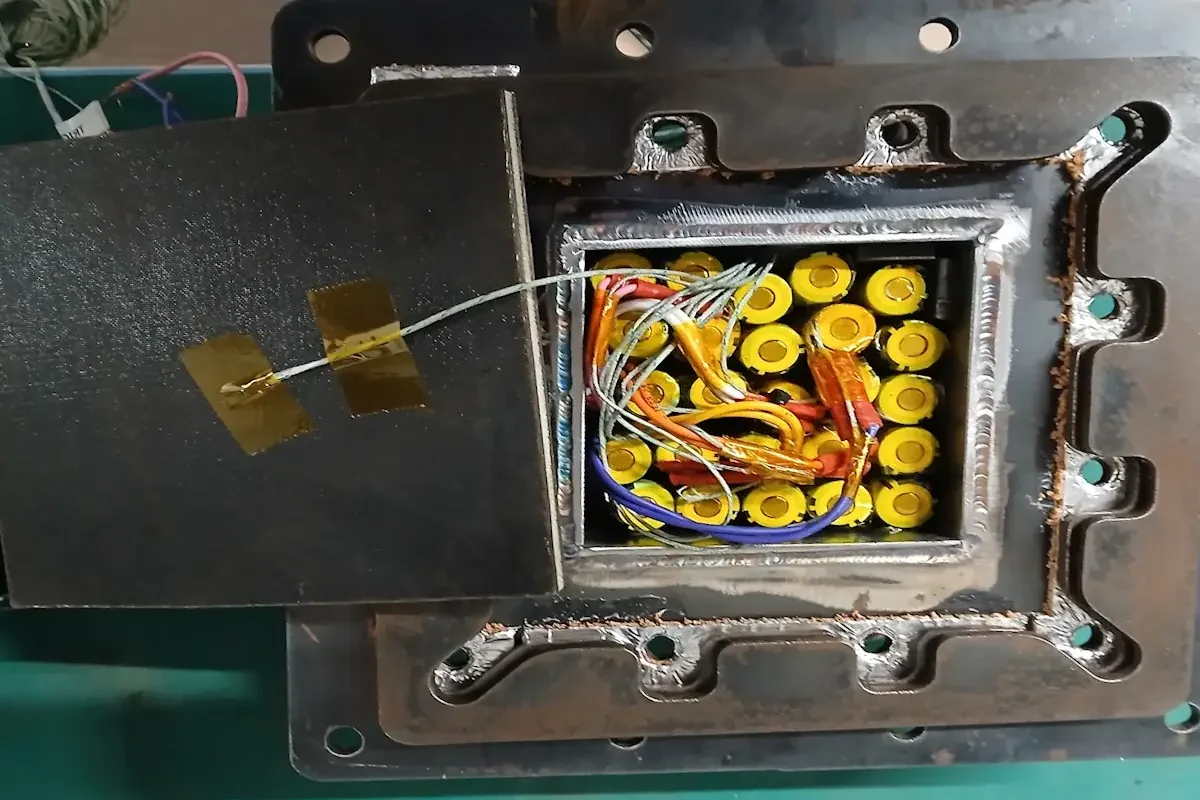
Resonate Testing developed a dedicated Battery Transport Container Test Procedure to support the approval of transport containers designed for the movement of damaged, defective, or potentially unsafe lithium-ion batteries. The procedure provides a robust basis for competent authority witnessed testing and demonstrates compliance with the additional performance requirements associated with ADR Packing Instructions P911 and LP906.
Transporting damaged lithium-ion batteries presents significant safety risks due to the potential for thermal runaway, fire, gas generation, and projectile release. Manufacturers of battery transport containers must demonstrate that their designs can safely contain these hazards while protecting personnel, infrastructure, and the surrounding environment.
Thermal runaway was initiated remotely. This controlled initiation method allowed the test team to safely reproduce a thermal incident while maintaining repeatability and consistency throughout the programme.
By combining controlled thermal runaway initiation with comprehensive temperature measurement and visual monitoring, the programme enables manufacturers to demonstrate compliance with ADR transport requirements and generate evidence to support competent authority approval.
A transport safety testing regime from the UN Manual of Tests and Criteria used to demonstrate that lithium and sodium batteries can be transported safely. It is a key requirement before many batteries can enter commercial transport.
An international standard covering the safe transport of lithium cells and batteries, including testing, packaging and shipment requirements.
Articles or substances that pose a risk during transport and are regulated by international transport rules. Lithium batteries are commonly classified as Dangerous Goods.
A test that exposes batteries to low-pressure conditions representative of air transport to assess safety and integrity.
A transport test that subjects batteries to repeated temperature changes to evaluate their ability to withstand environmental stresses during shipment.
A safety test designed to evaluate battery behaviour when an external electrical short circuit occurs.
The amount of stored energy within a battery expressed as a percentage of its total capacity.
Early review is important because containment choices and safe test methods become more complex as battery size and stored energy increase.
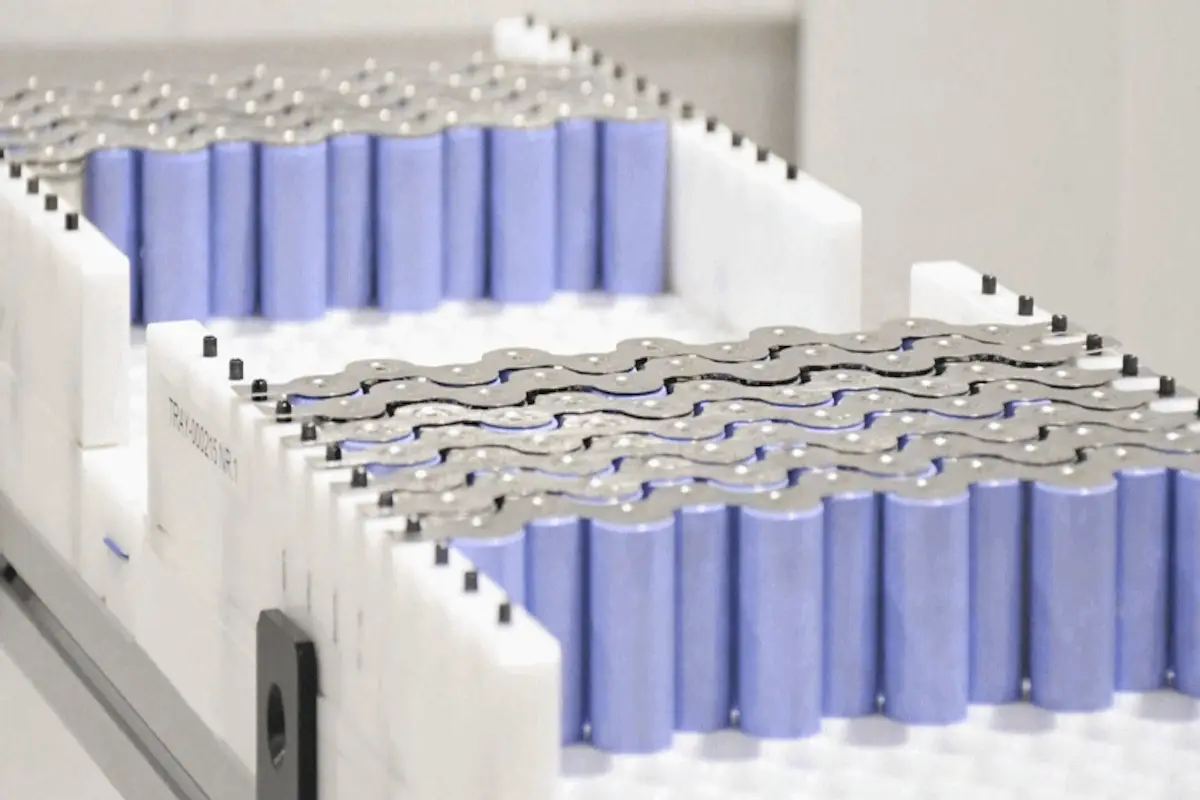
It assesses whether packaging or containment materials can control a representative battery failure event against agreed criteria such as external flame, projectiles, surface temperature and structural integrity.
Programmes may cover cells, modules, packs, batteries in equipment, transport boxes, containers, thermal liners, insulating materials and other containment systems, subject to technical review.
Provide packaging drawings and materials, battery chemistry and energy, dimensions and mass, state of charge, target regulation, acceptance criteria, initiation method, monitoring needs and shipping or emergency information.
Witnessing requirements can be built into the agreed procedure. The programme should define approvals, calibration evidence, specimen state, set-up checks and reporting responsibilities before the test.
Agreed outputs may include a test procedure, calibrated temperature data, event observations, photographs or video, post-test inspection and a technical report assessing the acceptance criteria.
No. Testing generates evidence against an agreed procedure and criteria. Regulatory acceptance or approval remains with the relevant competent authority and depends on the applicable transport requirements.
Planning a battery transport packaging or materials fire test? Send the battery details, packaging drawings, target requirements and acceptance criteria for engineering review.
Whether you’re looking to contact us for the first time or have another testing requirement, we’d love to hear from you.