
© 2026 ResonateTesting Ltd.
Engineer-led testing for medical technology and medical device programmes. We support product development, design verification, reliability checks and production readiness through environmental, vibration, shock and combined test campaigns.
Medical devices and healthcare technology must perform reliably through transport, storage, daily use and demanding operating conditions. Resonate Testing supports manufacturers with independent mechanical and environmental testing from development through verification, certification support and production readiness.
Resonate provides independent medical technology testing services for product developers and medical device manufacturers. Our environmental, vibration and shock testing capability helps teams validate reliability, durability and performance before products move into verification, certification support or production.
Ready to plan your medical technology testing campaign? Send your requirement, specification, drawings or test profile for engineer review and receive guidance on fixtures, instrumentation, setup and programme readiness.
Medical technology programmes often need practical test planning before a final specification is locked. Whether you are assessing a prototype, preparing for design verification or checking production readiness, an early engineering review can help define the most suitable route through climatic, vibration, shock and combined-environment testing.
Share your device description, drawings, mass properties, expected transport and use environments, standards, customer requirements, fixture assumptions, instrumentation needs and programme objectives. Resonate Testing can review setup, monitoring and reporting expectations before quotation.
Medical technology testing is rarely defined by one condition. Devices may need to tolerate shipping vibration, accidental shock, temperature extremes, humid storage, cleaning-related exposure or combined environmental and mechanical loads.
The objective is not simply to run a test. The objective is to generate evidence that is relevant to the device, use environment, reliability target and verification process. Temperature limits, humidity levels, vibration profiles, shock severity, dwell periods, functional monitoring and reporting requirements should be reviewed before testing begins.
Resonate Testing can work to recognised standards, customer-specific profiles or bespoke engineering requirements, using appropriate fixtures, instrumentation and agreed reporting outputs.
Early review of applicable requirements can reduce rework, improve traceability and help ensure the resulting test evidence aligns with stakeholder expectations.
Engineer-led environmental, mechanical and validation testing support for medical devices, medtech products, diagnostics, healthcare equipment and connected medical technology.
Resonate Testing supports medical technology teams with practical, evidence-based testing for development, verification, validation, customer acceptance and regulatory submission support. Test programmes can be planned around customer specifications, IEC 60601 environmental expectations, IEC 60068 methods, ISO 13485 quality system evidence, ISO 14971 risk-based requirements, ISO 10993 material considerations, transport and packaging standards, and programme-specific test plans.
Testing may include temperature exposure, humidity, vibration, mechanical shock, drop, transport simulation, ingress, corrosion, packaging assessment and functional monitoring before, during or after exposure.
Resonate Testing provides engineer-led test services for medical technology, medical devices, electronics, batteries and service-critical assemblies across the UK and Ireland. Our capability is typically delivered through three core groups of testing, tailored to product requirements and agreed specifications.
Environmental testing evaluates how devices perform when exposed to the conditions encountered during storage, transport and real-world use. Services can include temperature extremes, thermal cycling, humidity, condensation, altitude or low-pressure exposure, corrosion, rain and water ingress where the product requirement demands it.
Dynamic and mechanical testing assesses a product’s ability to withstand physical stresses experienced throughout its lifecycle. This includes sinusoidal vibration, random vibration, sine-on-random testing, mechanical shock, Shock Response Spectrum (SRS), field data replication and multi-axis testing where appropriate.
Qualification, validation and compliance testing supports the verification of medical devices, healthcare technology, electronic assemblies and mechanical structures against defined requirements. Test programmes can be planned to recognised industry standards, customer-specific profiles and expected lifecycle environments, helping to demonstrate readiness throughout development and production.
Temperature, humidity, cycling and climatic exposure can help assess how equipment, materials, seals, displays, electronics, adhesives, batteries and mechanical interfaces behave under defined conditions.
Medical devices may experience vibration, shock and handling loads during transport, installation, mobile use, clinical movement or home use. Vibration, mechanical shock, SRS and drop testing can help evaluate structural integrity, connector retention, enclosure performance, functional performance and robustness after exposure.
Packaging and transport-related assessment can include mechanical handling, vibration, shock, drop, climatic exposure or customer-defined distribution profiles alongside sterile barrier, labelling or shelf-life evidence managed by the manufacturer or specialist providers.
Medical technology programmes are often influenced by multiple standards, customer specifications and internal verification requirements rather than a single test method. Environmental, vibration and shock testing should be planned around the intended use environment, identified risks, product architecture, packaging configuration and the evidence required by the manufacturer.
Environmental testing may be aligned with recognised methods such as IEC 60068 for temperature, humidity and climatic exposure, while active medical electrical equipment programmes may reference relevant IEC 60601 expectations. Quality and traceability considerations are frequently linked to ISO 13485 quality management processes, with risk-based test planning informed by ISO 14971 principles where applicable.
Vibration, mechanical shock, drop and transport-related assessments can be derived from customer specifications, validation plans, transport profiles, packaging requirements or programme-specific acceptance criteria. The objective is to ensure that test conditions remain relevant to the product’s lifecycle, from storage and distribution through installation, operation and maintenance.
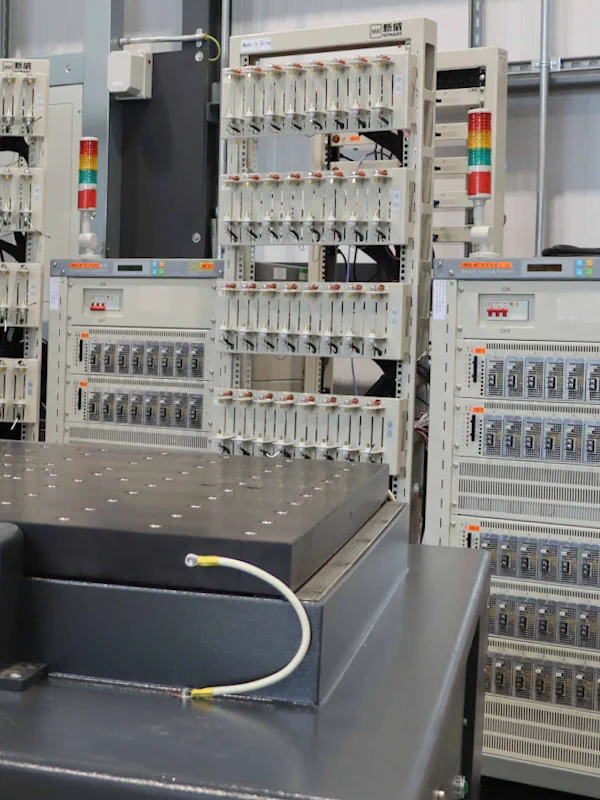
Medical technology often needs more than one environmental or mechanical test. Coordinating temperature, humidity, vibration and shock within one campaign helps reduce handover friction, align fixtures and documentation, and keep the engineering team connected across the full programme.
For projects that need combined environments, Resonate can support vibration with temperature and humidity, often described as “shake and bake”, where the requirement calls for it.
Resonate Testing supports medical devices, healthcare technology, electronics, batteries and assemblies where environmental, vibration, shock or reliability evidence is required.
Testing helps show whether a product can tolerate agreed transport, storage, handling, operating or environmental conditions and provides evidence for development, verification or production decisions.
The duration depends on the required tests, profile severity, fixture needs, instrumentation, dwell times, functional checks, reporting requirements and laboratory schedule.
Yes, if it is part of the agreed plan. Power, signal, monitoring and functional checks should be reviewed before testing so the correct interfaces and safety controls are in place.
Provide drawings, dimensions, mass, fixture assumptions, standards, test profiles, environmental limits, instrumentation needs, functional checks and any safety or handling concerns.
Typical outputs may include achieved test data, plots, observations, photographic evidence where agreed, completed functional checks and an agreed report or data pack.
Yes, where the requirement calls for it. Resonate can support combined vibration, temperature and humidity testing, often described as shake and bake.
Book testing for medical devices, healthcare technology, electronics, batteries and assemblies. Use the contact route to share the requirement, drawings, specification, test profile, operating environment or standards for review.
Whether you’re looking to contact us for the first time or have another testing requirement, we’d love to hear from you.


