
© 2026 ResonateTesting Ltd.
Recreating harsh space conditions on Earth, thermal vacuum testing meets customer, NASA, ECSS, and launch provider standards. It provides proof to confidently certify and qualify mission-critical spaceflight hardware.
Resonate provides thermal vacuum testing in the UK and Ireland for satellites, CubeSats, payloads, and mission-critical space hardware. Our advanced thermal vacuum chamber simulates vacuum and extreme temperatures during space operations. It helps customers qualify hardware to mission, customer, and NASA requirements.
From thermal vacuum cycling tests and operational TVAC testing to bakeout and contamination assessment, we support complete environmental verification programmes from concept through qualification and acceptance.
For customers requiring a complete space hardware testing campaign, thermal vacuum testing can be combined with Vibration Testing, Shock Testing and broader Environmental Testing services through a single engineering team.
Thermal vacuum testing, often called TVAC, exposes hardware to high vacuum and controlled temperatures. This helps teams see how a component behaves in a space-like environment.
 Vibration Testing UK & Ireland
 Shock Testing UK | Mechanical shock
 Environmental Testing
 Humidity Testing
 Corrosion and Salt Spray Testing
 Rain Testing and Water Ingress Testing
 Sand and Dust Testing
Resonate supports thermal vacuum testing UK and thermal vacuum testing Ireland programmes for satellite manufacturers, CubeSat developers, payload integrators and advanced engineering organisations.
Our facility helps customers throughout the UK and Ireland complete qualification, acceptance and environmental verification testing for mission-critical hardware. We can support logistics planning, handling requirements, integrated test campaigns and engineering review activities.
Whether you require satellite thermal vacuum testing, CubeSat TVAC testing or broader space hardware testing, our team can assist with programme planning, standards review and environmental test execution.
Ready to plan your thermal vacuum campaign? Send your requirement, specification, drawings or test profile for engineer review and receive guidance on chamber fit, instrumentation, thermal cycling and programme readiness.
Space hardware programmes rarely begin with a perfect specification. Whether you are validating an engineering model, preparing for qualification, planning acceptance testing, or assessing mission readiness, an early engineering review helps. We can help you identify the most practical route through thermal vacuum testing.
Share your hardware description, environmental requirements, temperature limits, vacuum targets, contamination concerns and programme objectives. Resonate Testing can review chamber fit, instrumentation needs, thermal cycling requirements and reporting expectations before quotation.
Thermal vacuum testing (TVAC) programmes are not governed by a single standard. Most space missions build their environmental verification approach using mission requirements, customer specifications, and launch provider criteria. They also follow recognised standards guidance, such as NASA and ECSS standards to define environmental verification requirements and space environments.
Engineers widely use NASA and ECSS standards to define thermal vacuum test objectives and requirements. NASA’s General Environmental Verification Standard (GEVS) defines environmental testing requirements for payloads, subsystems and components. ECSS standards cover thermal cycling, outgassing, and contamination control for spacecraft hardware.
In addition to NASA and ECSS guidelines, launch providers, satellite integrators, and mission partners often set extra requirements. These match each mission’s demands. They cover launch limits, mission timelines, orbital environments, and reliability standards.
Launch programmes involving SpaceX, Arianespace, Rocket Lab, United Launch Alliance (ULA), Blue Origin, and new European operators may need unique environmental checks. These checks should be included in test planning.
Effective TVAC testing focuses on generating evidence for qualification, acceptance and mission readiness. Test conditions such as vacuum levels, temperature ranges, thermal cycles, monitoring requirements and contamination controls are reviewed to ensure results remain relevant and traceable.
Because every mission differs, TVAC programmes meet specific requirements. Combining NASA guidance, ECSS standards, launch provider criteria and customer specifications helps create representative test environments and meaningful verification data.
Resonate Testing works with customers to review relevant standards and mission needs. We then develop tailored thermal vacuum test programmes. These programmes support spacecraft qualification, payload verification, and space hardware validation.
| Standard / Guidance | Primary Focus | Typical Relevance to Testing |
|---|---|---|
| NASA Thermal Vacuum Guidance | Spaceflight hardware development and verification | Provides context for development testing, engineering evaluation, qualification testing and pre-flight conditioning. |
| NASA GSFC-STD-7000B (GEVS) | Environmental verification | Guidance for environmental verification programmes covering payloads, subsystems and components. |
| ECSS-Q-ST-70-04C | Thermal testing under vacuum | Defines specification, execution and reporting approaches for thermal cycling of space materials, processes, parts and assemblies. |
| ECSS-Q-ST-70-02C | Outgassing screening | Addresses thermal vacuum outgassing assessment for materials used in spacecraft, launchers and payload equipment. |
| MIL-STD-1540 | Space system environmental testing | Frequently referenced in environmental verification and qualification activities for space hardware. |
| HDBK | Programme tailoring guidance | Guidance for environmental verification programmes covering payloads, subsystems and components. |
| MIL-STD-810 | Environmental engineering | May appear in aerospace and defence customer requirements where environmental durability evidence is required. |
| RTCA DO-160 | Airborne equipment qualification | Occasionally referenced for aerospace electronics and environmental qualification activities. |
| Customer & Launch Provider Specifications | Mission-specific requirements | Often define temperature limits, vacuum levels, cycle counts, monitoring requirements, acceptance criteria and reporting expectations. |
NASA identifies thermal vacuum testing as a critical part of spacecraft development, qualification and flight preparation. NASA thermal vacuum facilities test hardware in space-like conditions. They support development tests, engineering assessments, qualification programs, and pre-flight verification. [nasa.gov]
The NASA General Environmental Verification Standard (GEVS) is widely referenced during space hardware development. It provides guidance for environmental verification programmes covering payloads, subsystems and components, helping teams define appropriate environmental test strategies and approaches. [standards.nasa.gov]
The European Cooperation for Space Standardization (ECSS) framework is commonly used across European space programmes.
ECSS-Q-ST-70-04C gives requirements to specify, perform and report vacuum thermal cycling tests. These tests apply to materials, processes, mechanical parts, and assemblies for spacecraft and related equipment. [ecss.nl] [ECSS-Q-ST-…ace Agency]
ECSS-Q-ST-70-02C covers thermal vacuum outgassing tests for materials used in spacecraft and launch vehicles. It also covers payloads and related equipment. These tests help lower contamination risks for sensitive hardware.
Space and defence programmes may also reference standards like MIL-STD-1540. They may also use supporting guidance, including MIL-HDBK-340, to define environmental verification requirements. These documents are often encountered in launch vehicle, space systems and defence-related qualification programmes.
Depending on the application, programmes may also include customer-defined thermal vacuum requirements. They may also follow defence specifications or broader aerospace standards, such as MIL-STD-810 and RTCA DO-160. These standards can guide environmental test planning. They apply to hardware designed for harsh aerospace, defense, or high-altitude environments.
Our thermal vacuum chamber capability includes:
This capability supports qualification, acceptance and development testing for satellites, CubeSats, payloads and other advanced space hardware.
Successful TVAC testing UK programmes require more than achieving a target vacuum level. Monitoring and verification throughout the test cycle may include temperature and pressure measurements, customer telemetry, electrical interfaces, functional checks and post-test observations. Thermal vacuum bakeout and vacuum bakeout space hardware checks can also be included. Other options include outgassing thermal vacuum testing, RGA thermal vacuum testing, and QCM TQCM thermal vacuum monitoring.
The chamber includes standard feedthroughs, such as SMA, USB, DSUB25, and DSUB50 connectors. They support instrumentation, telemetry, and subsystem electrical interfaces. For hardware integration, you can mount vibration fixtures directly to the thermal table. Cable routing should usually allow about 1.5 m of length. This length helps fit the chamber’s internal shroud geometry. We can support with custom, dedicated feedthroughs for the customers specific needs. For New Space customers in particular, successful TVAC testing depends on more than simply securing chamber time. Consideration must be given to how hardware will be mounted, powered, monitored and protected throughout the test campaign. Early engagement helps identify these requirements in advance, reducing risk, improving test efficiency and increasing the likelihood of a successful qualification programme.
| Specification | Capability |
|---|---|
| Chamber Type | Thermal Vacuum Chamber (TVAC) |
| Base Vacuum Pressure | 1 x 10^-6 mbar |
| Temperature Range (Standard) | -70°C to +120°C |
| Temperature Range (Extended) | -80°C to +160°C |
| Maximum Temperature with Modifications | +160°C |
| Internal Dimensions | 1.2 m x 1.2 m x 1.2 m |
| Usable Internal Volume | Approximately 1.7 m³ |
| Maximum Specimen Mass | 500 kg |
| Pump-Down Time | Approximately 9 minutes |
| Temperature Monitoring | Thermocouple-based monitoring and control |
| Functional Monitoring | Telemetry, electrical interfaces, functional checks, and post-test observations |
| Standard Feedthroughs | SMA, USB, DSUB25, DSUB50 |
| Recommended Cable Length | Approximately 1.5 m |
| Test Planning Support | Vacuum levels, temperature set points, ramp rates, dwell periods, thermocouple locations, custom feedthrough requirements, test sequencing, safety planning, and reporting |
Repeatedly moving the test item between defined hot and cold temperatures to reveal issues such as expansion, contraction, fatigue or changing operating conditions.
A temperature-controlled surface inside the chamber that surrounds the hardware and helps create the required hot or cold radiative environment during the test.
A functional check carried out during the TVAC campaign, often at agreed dwell points, to confirm the hardware still performs as expected under vacuum and temperature conditions.
The release of trapped gases or volatile material from adhesives, coatings, polymers, plastics or other materials when exposed to vacuum.
A controlled heating process under vacuum used to drive off volatile substances before or during a contamination-sensitive test campaign.
A method for identifying gases present in the chamber during vacuum testing, often used when contamination behaviour needs closer review.
A contamination monitoring technique that measures material deposited on a sensitive surface, helping assess whether outgassing could affect mission hardware.
In vacuum, some materials can release volatile compounds. Those compounds may move and collect on colder surfaces. This can affect optics, sensors, thermal control surfaces, mechanisms, and clean assemblies.
Contamination risk should be reviewed early if the hardware includes adhesives, coatings, lubricants, tapes, 3D printed materials or sensitive optical surfaces. Witness samples, contamination monitoring, or dedicated cleanliness controls may be relevant. Confirm the available or planned approach before it is quoted or committed.
Space hardware often needs more than one environmental test. Coordinating TVAC, vibration, and shock in one campaign helps reduce handover friction. Running tests at one location aligns fixtures and documentation. It also keeps the engineering review connected across the full program.
For projects that also need mechanical environmental testing, review the related vibration and shock services.
Fast. Flexible. Accessible.
We agree the outputs before the test so the evidence matches the programme need. A typical package may include:
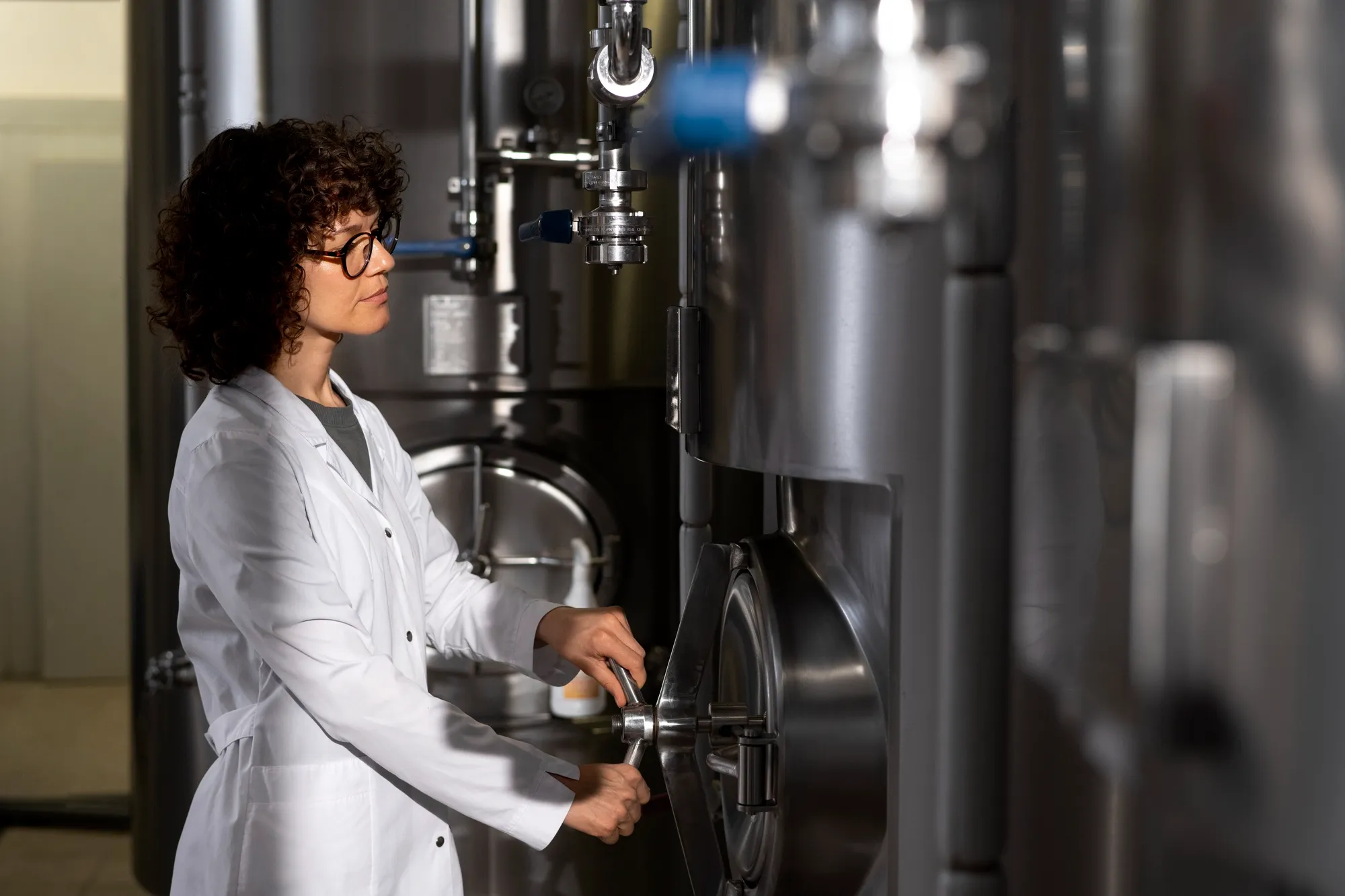
Thermal vacuum cycling repeatedly exposes hardware to hot and cold temperature extremes under vacuum to identify performance or reliability issues. Bakeout focuses on removing volatile compounds and reducing contamination risk before flight.
TVAC means thermal vacuum testing. It exposes hardware to controlled temperature conditions while under vacuum so teams can understand how it behaves in a space-like environment.
TVAC helps show whether hardware can tolerate vacuum exposure, hot and cold limits, thermal expansion, functional operation during dwell points and contamination risks from outgassing.
Thermal vacuum testing requirements vary by mission and specification. Typical programmes define target vacuum levels, thermal limits and cycling requirements to demonstrate performance under representative space conditions.
Yes. Standard feedthroughs include SMA, USB, DSUB25 and DSUB50 interfaces, with provision for customer-specific feedthrough requirements where needed.
The duration depends on the agreed profile, including pump-down, number of cycles, ramp rates, plateau temperatures, dwell times, functional checks and reporting requirements.
Yes, if it is part of the agreed plan. Power, signal, telemetry and functional checks need to be reviewed before testing so the correct feedthroughs and safety controls are in place.
Outgassing, contamination and bakeout needs should be reviewed before quotation. The available or planned approach should be confirmed before it is committed.
Provide dimensions, mass, temperature limits, vacuum requirement, cycle count, feedthrough needs, telemetry channels, functional checks and any safety or contamination concerns.
Typical outputs may include temperature and pressure data, plots of the achieved profile, observations, photographic evidence where agreed, completed functional checks and an agreed report or data pack.
Book thermal vacuum testing for satellites, CubeSats, payloads and space hardware. Use the contact route to share the requirement, test profile, drawings or specification for review.
Whether you’re looking to contact us for the first time or have another testing requirement, we’d love to hear from you.