
© 2026 ResonateTesting Ltd.
Resonate Testing provides RTCA DO-311A, FAA TSO-C179b and EASA ETSO-C179b testing for permanently installed lithium batteries, including battery abuse testing and thermal runaway containment verification at cell, module and battery pack level.
RTCA DO-311A testing is essential for demonstrating that lithium batteries can be integrated safely and in compliance with international aviation regulations. By choosing Resonate Testing, manufacturers benefit from expert testing services delivered by a laboratory capable of carrying out RTCA DO-311A, FAA TSO-C179b and EASA ETSO-C179b testing. This helps verify product safety, support regulatory compliance (FAA/EASA Technical Standard Orders), and streamline access to global aerospace markets, backed by reliable results and professional guidance throughout the testing and qualification process.
It demonstrates that batteries can perform their intended functions safely under conditions encountered in aeronautical operations.
 Environmental testing
 Vibration testing
 Shock testing
Ready to plan an RTCA DO-311A battery testing campaign? Send your requirement, drawings, installation assumptions or certification plan for engineer review and receive guidance on fireproof or fire-resistant classification, setup, instrumentation and evidence requirements.
Battery qualification programmes often require early review of the battery design, cell chemistry, intended aircraft application, certification pathway, test sample quantities and reporting requirements before testing begins.
Share battery drawings, dimensions, mass, electrical specifications, datasheets, safety documentation, applicable aviation standards and required reporting scope. Resonate Testing can review the proposed test programme and certification objectives before quotation.
Aerospace battery testing is driven by the battery chemistry, installation, certification route and the role of the battery within the aircraft. Requirements may reference RTCA DO-311A, ETSO-C179b, TSO-C179b, or customer-specific procedures. The objective is not simply to run a battery through a generic test programme. The objective is to generate traceable evidence that the battery system satisfies the agreed safety, performance and airworthiness requirements for its intended aviation application. Early standards review helps reduce rework and ensures the final test evidence aligns with the intended certification, customer approval or aircraft development programme.
Before testing begins, the programme should confirm battery configuration, ratings, installation assumptions, sample quantities, acceptance criteria, qualification procedures and reporting scope.
RTCA DO-311A testing is required across:
Venting categories are defined below and are based on the designed provisions for venting emissions when tested in accordance with this standard:
| Standard / Guidance | Primary Focus | Typical Relevance |
|---|---|---|
| AC20-192 | Testing, installation and airworthiness compliance for non-rechargeable lithium cells and batteries | Advisory Circular giving guidance on testing and installation of non-rechargeable lithium cells, batteries and batteries within end items on aircraft. It provides an acceptable means of compliance for installation, operation, maintenance, airworthiness requirements, safety objectives and safety criteria. |
| AC-20-04 | Airworthiness approval and installation guidance for non-rechargeable lithium battery equipment | Airworthiness Circular covering airworthiness requirements for equipment with non-rechargeable lithium batteries. It informs organisations managing equipment with NRLBs of NRLB-specific airworthiness considerations. |
| 14 CFR Part 121 | Operational and safety requirements for commercial air transport involving lithium batteries | Title 14 of the Code of Federal Regulations, Part 121, including Subpart X and Appendix A. Covers air carrier certification context, including Appendix A requirements for first aid kits and emergency medical kits. |
| ICAO Technical Instructions for the Safe Transport of Dangerous Goods by Air (ICAO Doc 9284) | Safe transport of lithium batteries and other dangerous goods by air | International Civil Aviation Organization instructions supporting the safe international transport of dangerous goods by air. These contain the detailed provisions needed to apply Annex 18 requirements. |
| Commission Regulation (EU) 965/2012 of 5 October 2012 | EU operational safety requirements for commercial air transport and specialised operations | Air Operations Regulation laying down detailed rules for air operations with aeroplanes and helicopters, operator certification, declarations, oversight, privileges and responsibilities, and authorisations for certain high-risk commercial specialised operations in the interest of safety. |
| FAA TSO-179b — Technical Standard Order: Aircraft Lithium Battery Systems | Airworthiness approval requirements for rechargeable lithium cells, batteries and battery systems installed on aircraft. | Federal Aviation Administration (FAA) Technical Standard Order defining the minimum performance standards for rechargeable lithium battery systems used in aviation applications. TSO-C179b supports the approval of lithium battery installations and typically relies on RTCA DO-311A testing to demonstrate safety, performance and compliance with aircraft airworthiness requirements. |
| ASTM F3653 (2024) — Standard Specification for Installation of Rechargeable Lithium Batteries on Aircraft | Installation, integration and continued airworthiness requirements for rechargeable lithium batteries in aircraft applications. | Provides guidance for the safe installation and airworthiness assessment of rechargeable lithium battery systems on aircraft. Supports manufacturers, installers and certification applicants in addressing hazards associated with lithium battery integration, operation, maintenance and continued airworthiness. |
| FAA AC 20-184A – Guidance on Testing | Testing, installation and airworthiness compliance guidance for rechargeable lithium battery cells, batteries and battery systems installed on aircraft | FAA Advisory Circular providing an acceptable means of compliance for the installation, operation, maintenance and continued airworthiness of rechargeable lithium battery systems used in aviation applications. |
Testing performed to RTCA DO-311A is intended to support the qualification of rechargeable lithium batteries and battery systems used in aircraft applications. The standard is referenced within aviation battery approval routes such as ETSO-C179b and TSO-C179b and approval programmes for rechargeable lithium battery installations. Typical objectives include assessing whether the battery system design, safety features and test evidence are suitable for the specified aviation requirement, customer specification or certification route.
Test planning is normally based on the specific battery system design and applicable aviation requirements, including cell chemistry, battery configuration, ratings, charging and discharging characteristics, drawings, dimensions, mass, sample quantities, safety documentation, instrumentation and reporting expectations. Applicability should be confirmed for the exact battery system, aircraft installation and certification programme requirements before testing begins.
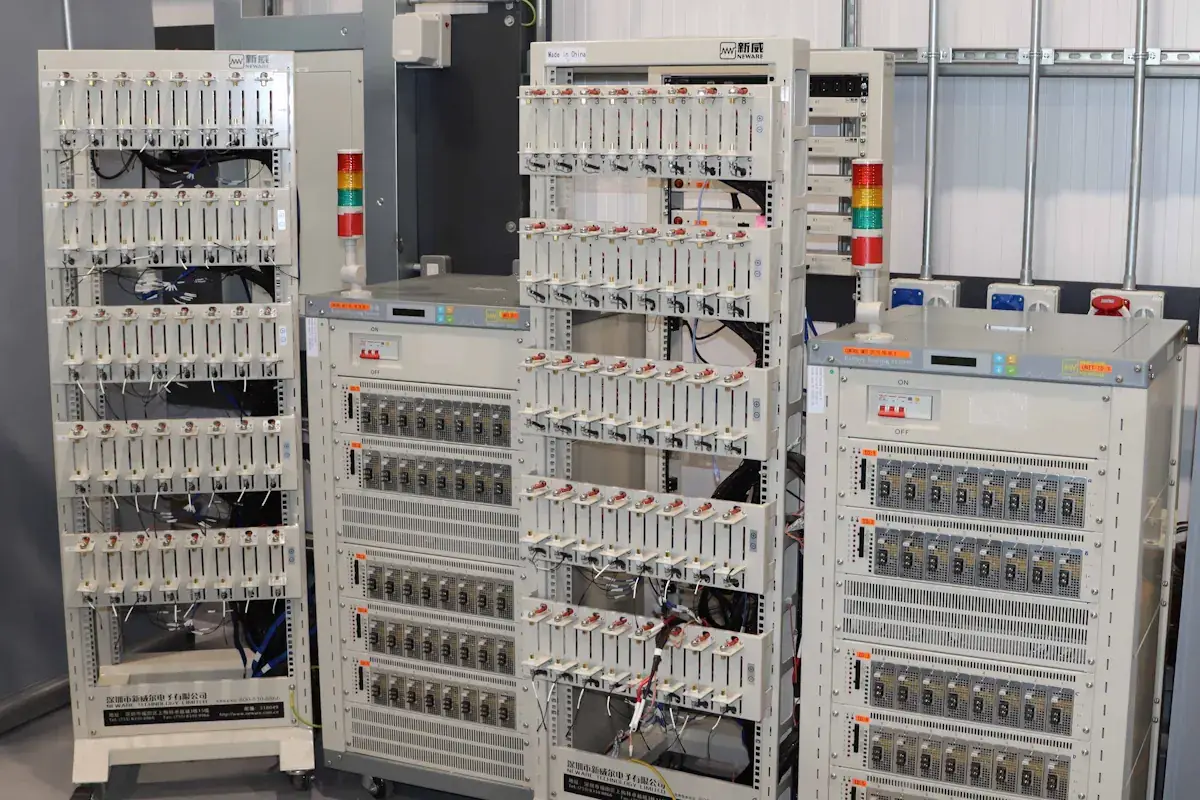
RTCA DO-311A is commonly used to support aviation battery certification programmes requiring approval under FAA and EASA airworthiness frameworks. For rechargeable lithium batteries and battery systems, the primary approval reference is FAA TSO-C179b and the equivalent EASA ETSO-C179b, both of which reference RTCA DO-311A as the applicable Minimum Operational Performance Standard (MOPS). Compliance with DO-311A provides evidence that rechargeable lithium batteries can safely withstand operational, environmental and abuse conditions expected in aviation service and forms a key part of many aircraft, avionics, emergency power and battery system approval programmes.
RTCA DO-311A is typically applied alongside a range of aerospace certification standards and approval documents that support the airworthiness assessment of rechargeable lithium battery systems. Environmental qualification requirements are closely linked to RTCA DO-160, while software-controlled battery management systems may require compliance with RTCA DO-178 software assurance guidance. Depending on the aircraft, equipment and certification route, battery testing data generated to RTCA DO-311A may be used to support aircraft type certification, Supplemental Type Certificate (STC) programmes, FAA Technical Standard Orders (TSOs), EASA European Technical Standard Orders (ETSOs), and other regulatory approval activities.
Resonate Testing provides engineer-led aerospace battery testing support for rechargeable lithium batteries and battery systems used in aircraft applications. Programmes can be planned against RTCA DO-311A, applicable FAA and EASA approval requirements, relevant UL and IEC standards, and customer-defined battery qualification requirements.
The laboratory supports development, validation, qualification and certification evidence for rechargeable lithium battery systems where the agreed scope, safety documentation, test item quantities and reporting requirements are confirmed before quotation.
RTCA DO-331A defines the minimum performance standards for rechargeable lithium batteries used in airborne applications. The test programme ensures batteries can withstand the electrical, mechanical, thermal and environmental stresses likely to be encountered during normal operation and in fault conditions, helping to ensure safety and reliability in aviation applications.
Where the requirement demands it, Resonate can coordinate battery testing with related environmental or mechanical test activity so the evidence package aligns with the wider qualification programme.
Early engagement helps identify sample needs, safe operating limits, fixture requirements, instrumentation access and practical risks before the test campaign starts.
| Specification | Capability |
|---|---|
| Insulation resistance | Electrical isolation between power contacts and case before and after environmental testing. |
| Handle strength | Lifting integrity under twice the battery weight |
| Rated and thermal capacity | Capacity delivery at standard, operating low and operating high temperatures. |
| High-rate cycling | Repeated high-rate discharge and recharge performance for high-rate batteries. |
| Protected short circuit and overcharge | Behaviour with protective circuits operational under defined electrical abuse conditions. |
| Unprotected short circuit and overdischarge | Destructive testing with external protection disabled or bypassed to monitor containment thresholds. |
| Thermal runaway containment | Single-cell and battery-level runaway containment, including prevention of fragments or flames escaping. |
| Explosion containment and drop impact | Explosion atmosphere containment for batteries over 100 Wh and drop impact for portable devices in type design. |
An assembly consisting of one or more rechargeable lithium batteries together with any associated monitoring, control, protection or enclosure components.
The basic electrochemical unit that stores and releases electrical energy.
A battery that can be repeatedly charged and discharged and uses lithium-based electrochemistry.
A condition where increasing battery temperature causes further heat generation, potentially leading to fire, venting or battery failure.
Charging a battery beyond its specified limits, which can create safety and performance risks.
Discharging a battery below its minimum allowable voltage, potentially causing permanent damage or safety concerns.
An unintended low-resistance electrical connection that can result in excessive current flow, heating and battery failure.
A technical standard that defines the minimum safety, performance and functional requirements a product must meet to be considered suitable for use in a specific aviation application. MOPS documents establish the test methods, acceptance criteria and performance benchmarks used to demonstrate compliance during certification and airworthiness approval programmes.
In RTCA DO-311A battery testing, the condition of each sample before, during and after test activity is central to the evidence package. Visible damage, venting, leakage, deformation, temperature behaviour and other agreed observations should be considered when defining acceptance criteria.
Risk should be reviewed early because lithium cells and batteries involve stored energy, chemistry-specific hazards and handling constraints. Instrumentation, photographs, witness inspection, quarantine arrangements and emergency response information should be agreed before the test is quoted or committed.
Aerospace battery qualification programmes may require more than standalone RTCA DO-311A testing. Coordinating RTCA DO-311A battery testing with vibration, shock, temperature, altitude, humidity and other environmental testing can help align sample planning, instrumentation, test sequencing and certification evidence across the wider qualification programme.
For projects that also require mechanical, environmental or aerospace qualification testing, review the related services before finalising the test campaign, certification strategy and evidence package.
Outputs are agreed before the test so the evidence matches the programme need. A typical package may include:
Recorded test conditions, battery observations and agreed instrumentation data
Evidence of achieved conditions, test sequence and agreed sample handling steps
Observations from setup, test execution and post-test review
Photographic evidence where agreed
Venting, leakage, deformation, temperature behaviour or other observations where included in the plan
An agreed test report or data pack aligned to the quotation scope
DO-311A upgrades the original 2008 standard by introducing much stricter requirements for thermal runaway containment and cell-to-cell propagation prevention.
RTCA DO-311A is a Minimum Operational Performance Standard used to demonstrate that permanently installed rechargeable lithium batteries and battery systems can perform safely under aeronautical operating conditions.
No. Its purpose is operational airworthiness and continuous flight safety under reasonably foreseeable aviation conditions, not transport safety.
It applies to lithium battery cells, modules, standalone battery packs, permanently installed aircraft battery systems and embedded batteries within equipment such as LRUs.
Rechargeable lithium batteries under two watt-hours may be exempt from this standard when certified to UL 1642, UL 2054 or IEC 62133; otherwise Category 2 applies.
The programme can include insulation resistance, rated capacity, thermal capacity, high-rate cycling, protected and unprotected short circuit, overcharge, overdischarge, runaway containment, explosion containment and drop impact.
Yes. Resonate Testing provides integrated environmental and vibration testing capabilities to cover secondary RTCA/DO-160 requirements mandated by the test matrix.
Send the battery specification, energy category, venting category, drawings, intended aircraft application, protective circuitry details, environmental requirements and acceptance criteria for engineer review.
Whether you’re looking to contact us for the first time or have another testing requirement, we’d love to hear from you.