
© 2026 ResonateTesting Ltd.
Helping battery manufacturers ship lithium and sodium batteries legally and safely worldwide.
Providing testing evidence that batteries comply with the UN Manual of Tests and Criteria, Part III, Subsection 38.3.
UN38.3 testing is essential for demonstrating that lithium batteries can be transported safely and in compliance with international regulations. By choosing Resonate Testing, manufacturers benefit from expert testing services delivered by one of only a few UK-based laboratories capable of carrying out UKAS-accredited UN38.3 testing. This helps verify product safety, support regulatory compliance, and streamline access to global markets, backed by reliable results and professional guidance throughout the testing and qualification process.
UN 38.3 is a transportation safety standard used to demonstrate that lithium and sodium batteries can be safely transported through normal distribution channels. It is not a performance standard; its purpose is transport safety under reasonably foreseeable shipping conditions.
It applies to:
Lithium-ion cells
Lithium-ion battery modules
Lithium-ion battery packs
Lithium metal batteries
Sodium-ion cells, modules and battery packs
Battery systems integrated into equipment
Resonate Testing provides UN 38.3 testing, lithium and sodium battery transport certification, battery abuse testing and thermal runaway testing at cell, module and battery pack level from its dedicated battery testing facility in Newry, Northern Ireland.
Lithium and sodium batteries can be classified as Dangerous Goods for transport. Before commercial shipment, manufacturers and integrators normally need evidence that batteries comply with the UN Manual of Tests and Criteria, Part III, Subsection 38.3.
UN 38.3 testing for lithium-ion and sodium-ion cells, modules and packs
Support for batteries integrated into equipment
Battery abuse, propagation and thermal runaway expertise
Transport compliance support for road, sea and air shipment
Ready to ship your batteries worldwide? Speak to the battery safety team about UN 38.3 testing for lithium and sodium batteries, battery transport certification, battery abuse testing and thermal runaway testing at the Newry facility.
UN 38.3 testing is commonly required across:
BESS and ESS
Telecommunications
UPS and critical power systems
Material handling equipment, AGVs and AMRs
Marine battery systems
Railway applications
Industrial equipment and machinery
Aerospace development and defence programmes
Common assumptions can create transport risk. A UN 38.3 certificate for a cell does not automatically cover a battery pack, and a certified module does not automatically cover a full battery assembly.
Packs can include additional electrical protection, interconnects, enclosures, battery management systems and mechanical structures that alter transport safety behaviour.
Failure to comply can lead to shipment rejection, carrier refusal, customs delays, regulatory penalties, increased insurance risk and Dangerous Goods transport violations.
UN 38.3 Test programme
Resonate Testing performs the complete UN 38.3 programme for lithium and sodium battery chemistries. Additional handling drop testing can also be requested to represent real-world logistics and user handling environments. UN 38.3 is not simply a menu of independent tests. Defined groups of samples normally progress through a prescribed sequence, often called a cascade. Earlier exposures may influence the response to later tests, so replacing cascade testing with unrelated one-off tests requires a clear regulatory basis. The testing includes the following requirements:
| Standard / Guidance | Primary Focus | Typical Relevance |
|---|---|---|
| T1 – Altitude Simulation | 50,000 ft simulation at ambient temperature for 6 hours. | Cells and batteries |
| T2 – Thermal Test | 10 cycles, holding at hot and cold temperature extremes for 6 or 12 hours, plus 24-hour stability. | Cells and batteries |
| T3 – Vibration | Sine vibration from 7 Hz to 200 Hz, 12 sweeps, 3 hours per axis, with parameters depending on battery size. | Cells and batteries |
| T4 – Shock | Half-sine shock: 3 per axis, 18 shocks total, with parameters depending on battery size. | Cells and batteries |
| T5 – External Short Circuit | 57 ± 4 °C external case stabilised, then short circuit with external resistance <0.1 ohm at ambient temperature. Continued for >1 hour after the external case temperature has returned to 57 ± 4 °C, or after the external case temperature has decreased by half of the maximum temperature increase observed. | Cells and batteries |
| T6 – Crush | Two flat surfaces at approximately 1.5 cm/s at the first point of contact. Continued until the applied force reaches 13 kN ± 0.78 kN, the cell voltage drops by at least 100 mV, or the cell is deformed by >50% of original thickness. | Cells |
| T6 – Impact | 9.1 kg ± 0.1 kg mass dropped from 61 ± 2.5 cm using a frictionless, vertical sliding track, 90° to horizontal, with a Type 316 stainless steel bar on the cell. | Batteries |
| T7 – Overcharge | Test charge current is twice the manufacturer’s maximum. Test voltage is the lesser of twice the manufacturer’s recommended charge voltage (CV), 22 V, or 1.2 times CV if CV is more than 18 V. Charge time is 24 hours at ambient temperature. | Cells |
| T8 – Forced Discharge | 12 V D.C. power supply with initial current equal to the maximum discharge current; discharge using a resistive load at ambient temperature, monitored for 7 days. | Cells |
Alongside UN 38.3 transport testing, Resonate supports deeper battery safety and abuse programmes at cell, module and pack level.
Thermal runaway and propagation testing
Cell, module and battery pack abuse testing
Fire testing
Overcharge, crush and nail penetration studies
IEC 62619 and RTCA DO-311A testing
Technical review: review battery architecture and shipping configuration.
Test planning: define sample requirements and the qualification route.
Testing: complete testing at the Newry facility – UK and EU Access assured.
Assessment: review safety performance against acceptance criteria.
Reporting: issue detailed technical reports and UN 38.3 evidence documentation summary.
Before a new lithium cell or battery design has completed UN 38.3 testing, it may still need to be transported to a laboratory for testing and qualification. ADR Special Provision 310 (SP 310) provides a route for eligible pre-production prototypes and small production runs to be transported for testing before the normal UN 38.3 testing requirement has been satisfied.
ADR Special Provision 310 provides a transport route for eligible pre-production prototype cells and batteries, and qualifying small production runs, that need to be transported for testing before the applicable testing requirements have been completed.
Special Provision 310 applies to:
For these cells and batteries, SP 310 provides specified exceptions from the requirements of ADR 2.2.9.1.7.1, including the requirement relating to successful completion of the tests in the UN Manual of Tests and Criteria, Part III, subsection 38.3.
This means that an eligible prototype does not need to have already completed UN 38.3 testing simply to be transported to a laboratory for that testing. Instead, it must meet the applicable requirements of SP 310, including the use of P910 or LP905 packaging, as applicable.
Prototype cells and batteries transported under SP 310 must be packaged in accordance with P910 or LP905, as applicable.
ADR requires the applicable cells and batteries to be packaged in accordance with:
P910 provides a packaging route for applicable prototype and small-production-run cells and batteries. It covers the relevant lithium battery entries UN 3090, UN 3091, UN 3480 and UN 3481.
Each cell or battery must be individually packed in an inner packaging and then placed inside an approved outer packaging.
The outer packaging may be a specified:
Drum
Box
Jerrican
The selected packaging must conform to the Packing Group II performance level.
Each inner packaging must be completely surrounded by sufficient non-combustible and electrically non-conductive thermal insulation material.
This insulation is intended to protect the package against dangerous heat development.
Where an individual cell or battery has a net mass greater than 30 kg, only one cell or battery may be placed in each outer packaging.
This does not mean that batteries above 30 kg must automatically use LP905. The 30 kg provision is a restriction within P910 rather than a fixed crossover point between P910 and LP905.
LP905 provides the corresponding large-packaging route for eligible prototype and small-production-run batteries transported under SP 310. It can be used for a single battery or a single item of equipment containing cells or batteries.
LP905 permits rigid large packagings meeting the Packing Group II performance level.
Permitted materials and packaging codes include:
Steel – 50A
Aluminium – 50B
Metal other than steel or aluminium – 50N
Rigid plastic – 50H
Natural wood – 50C
Plywood – 50D
Reconstituted wood – 50F
Rigid fibreboard – 50G
A single battery must be placed inside an inner packaging, which is then placed within the rigid large outer packaging.
The inner packaging must be completely surrounded by sufficient non-combustible and electrically non-conductive thermal insulation material to protect against dangerous heat development.

For individually packaged cells or batteries, the inner packaging must be surrounded by sufficient non-combustible and electrically non-conductive thermal insulation material to protect against dangerous heat development.
Appropriate measures must be taken to:
Where cushioning is used to provide this protection, the material must be non-combustible and electrically non-conductive.
The non-combustibility of the applicable thermal insulation and cushioning materials must be assessed against a standard recognised in the country where the packaging is designed or manufactured.
The applicable packaging must meet the required Packing Group II performance level.
Where cells or batteries of different sizes, shapes or masses are packed in an applicable tested packaging design, the total gross mass of the completed package must not exceed the gross mass for which the packaging design type was tested.
Both packaging routes provide requirements for batteries contained in equipment. Appropriate measures must be taken to protect the equipment against vibration, shock and movement that could cause damage or create a dangerous condition during transport.
The specific packaging configuration and additional requirements depend on whether P910 or LP905 is being used.
Both P910 and LP905 provide packaging routes for eligible prototype and small-production-run batteries transported under SP 310:
P910 uses specified conventional outer packagings, including drums, boxes and jerricans.
LP905 uses specified rigid large packagings and is limited to a single battery or a single item of equipment containing cells or batteries.
The applicable packaging route must be selected according to the battery and proposed packaging configuration.
A battery weighing more than 30 kg does not automatically have to use LP905. Under P910, the 30 kg provision limits the package to one cell or battery rather than creating a mandatory threshold for switching to LP905.
The Newry facility provides large-scale battery abuse chambers, thermal runaway facilities, fire testing capability, environmental chambers, vibration testing systems, gas analysis equipment and instrumented propagation testing.
In addition to UN 38.3 testing, the Newry facility can support wider battery safety, environmental and abuse testing programmes, enabling manufacturers to investigate battery behaviour, verify transport compliance and generate the evidence required for global shipment of battery-powered products. Our experienced engineering team can assist with test planning, sample selection, reporting and transport compliance requirements throughout the qualification process.
UN 38.3 testing is a key requirement for the transport of lithium batteries, but successful completion of the test programme is only one part of transport compliance. Batteries must also be correctly classified, marked and labelled before they can be shipped through international distribution networks.
Lithium batteries are assigned specific UN identification numbers based on their chemistry and shipping configuration. The most common classifications include:
These UN numbers are used on transport documentation and battery shipping marks to help carriers identify the contents of a package and apply the appropriate handling requirements.
Class 9 Lithium Battery Hazard Label
Some lithium battery shipments are classified as fully regulated dangerous goods and require the Class 9 Lithium Battery Hazard Label, also known as the Class 9A Lithium Battery Label.
This label is commonly required for larger battery shipments transported under dangerous goods regulations and provides a clear indication that the package contains regulated lithium batteries requiring specialised handling during transport.
| Specification | Capability |
|---|---|
| Test Type | UN 38.3 lithium battery transportation testing |
| Battery Focus | Lithium-ion and lithium metal cells and batteries intended for transport |
| Test Areas | Altitude simulation, thermal testing, vibration, shock, external short circuit, impact/crush, overcharge and forced discharge |
| Applicable | UN Manual of Tests and Criteria Part III, Sub-section 38.3, IATA Dangerous Goods Regulations (DGR), ICAO Technical Instructions, IMDG Code, ADR and customer requirements |
| Component Types | Lithium-ion cells, lithium metal cells, battery packs, battery modules and batteries contained in or packed with equipment |
| Planning Inputs | Cell chemistry, battery configuration, watt-hour rating, lithium content, state of charge, sample quantity and transportation scenario |
| Instrumentation | Temperature monitoring, voltage monitoring, visual inspections and customer-specified data acquisition where required |
| Assessment Focus | Leakage, venting, disassembly, rupture, fire, mass loss, voltage stability and transport safety compliance |
| Test | UN 38.3 test programme review, sample quantity verification, transportation classification support, safety review and reporting scope definition |
Test planning: define sample requirements and the qualification route.
Testing: complete testing at the Newry facility – UK and EU Access assured.
Reporting: issue detailed technical reports and UN 38.3 evidence documentation summary.
An electronic circuit or control system integrated into a battery pack that monitors operational parameters (voltage, current, temperature) and ensures the battery operates within safe limits.
An assembly of one or more lithium-ion cells, complete with electrical connections, housing, and electronic protective devices.
A single electrochemical unit that converts chemical energy into electrical energy, containing a rechargeable lithium-ion positive and negative electrode.
The mechanical failure of a cell container or battery case caused by internal pressure, resulting in ejected solid fragments.
The release of excessive internal pressure from a cell or battery in a manner intended by design to prevent rupture.
A test state where a rechargeable battery is subjected to a charging current that exceeds the manufacturer’s specified limits.
A direct connection between positive and negative terminals of a cell or battery that provides a virtual zero resistance path for current flow.
Alongside UN 38.3 transport testing, Resonate supports deeper battery safety and abuse programmes at cell, module and pack level.
Thermal runaway and propagation testing
Cell, module and battery pack abuse testing
Fire testing
Overcharge, crush and nail penetration studies
IEC 62619 and RTCA DO-311A testing
Resonate Testing supports UN 38.3, IEC 62619, IEC 62133, UN ECE R100, RTCA DO-311A, RTCA DO-160 and customer-specific transport qualification programmes.
Related capability includes lithium and sodium battery testing, thermal runaway testing, battery propagation testing, battery fire testing, battery abuse testing, vibration testing, environmental testing, battery design review and transport compliance consultancy.
Fast. Flexible. Accessible.
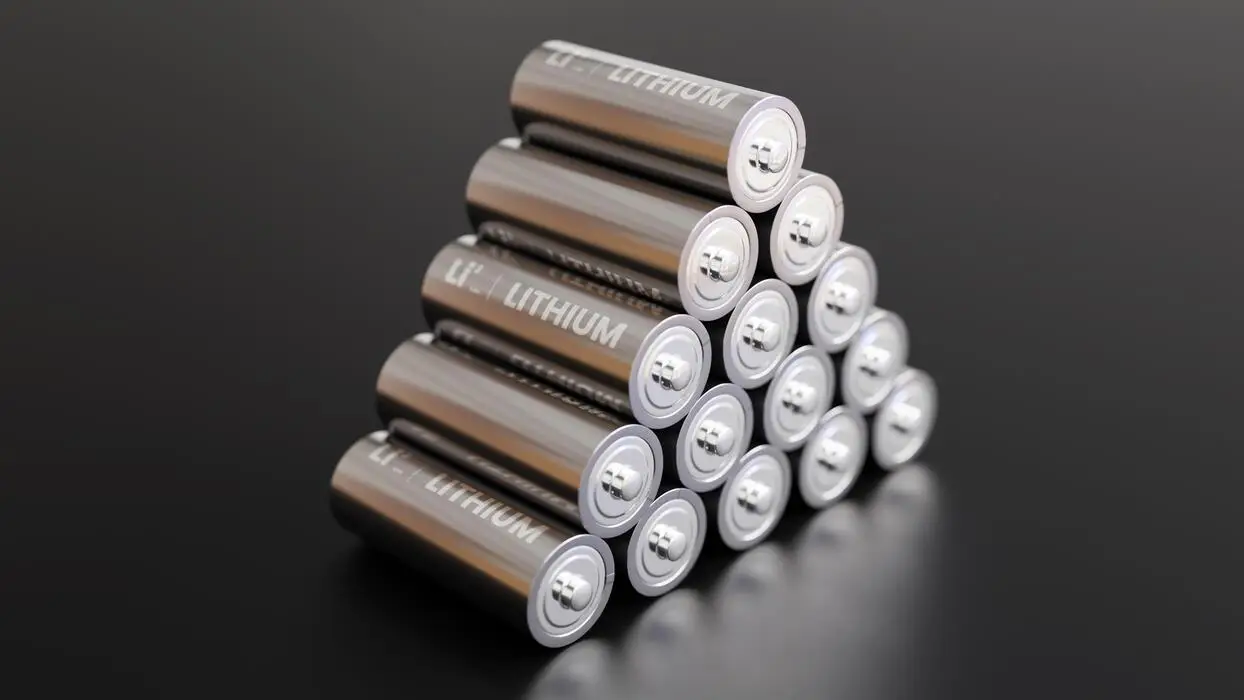
UN 38.3 applies to lithium-ion cells, sodium-ion cells, battery modules, battery packs and lithium metal batteries intended for transport.
Not normally. The additional components in assembling a module or a creating a pack can, introduce new failure mechanisms or alter safety behaviour. The certified cell level test really covers the cells shipping to the module or pack manufacture. UN 38.3 testing should be applied at all levels of shipment and sparable items. If the product ships with a pack made of modules and the only sparable item is a replacement pack, the modules may not need a separate certification.
In many cases yes, but special Dangerous Goods arrangements may be required depending on battery status and applicable regulations.
Yes. Resonate can offer transportation support for battery systems being submitted for testing, helping customers navigate Dangerous Goods requirements.
Yes. Resonate provides range of thermal runaway, propagation and battery abuse testing at cell, module and battery pack level.
Resonate issues detailed technical reports and UN 38.3 evidence documentation after testing and assessment against acceptance criteria.
Whether you’re looking to contact us for the first time or have another testing requirement, we’d love to hear from you.


