
© 2026 ResonateTesting Ltd.
Resonate Testing supports development, qualification and certification campaigns by assessing how materials, components and complete upholstery assemblies respond to defined ignition and flame exposure conditions. Testing can support assessment against UL, IEC, BS and ISO methods.
Resonate combines engineer-led test planning with practical flammability expertise, reviewing your material, specimen configuration, applicable standard and acceptance criteria before testing begins. From development through qualification and certification support, we help keep the test method, evidence and reporting aligned with your programme requirements.
Flammability testing evaluates how a material, component or product responds when it is exposed to a defined ignition source or flame under controlled conditions. Depending on the applicable method, the assessment can examine whether the specimen ignites, how burning develops and whether combustion continues after the ignition source is removed.
For Resonate Testing programmes, the exact assessment is determined by the selected standard and the product being tested. Relevant observations can include:
Ignitability — the response of the specimen to the specified ignition source.
Burning behaviour — including horizontal or vertical burning behaviour and, where specified, burning rate.
Afterflame and afterglow — whether flaming or glowing combustion continues after the applied flame is removed.
Self-extinguishing behaviour — whether the specimen stops burning within the conditions defined by the method.
Other method-specific observations — such as flaming drips, progressive smouldering or the extent of burning.
Flammability is therefore not a single universal test. The appropriate method depends on the material, its intended end use, specimen construction and the programme or regulatory objective. The applicable standard, specimen configuration, conditioning and acceptance criteria should be established before testing begins.
 Vibration Testing
 Shock Testing
 Environmental Testing
 Corrosion and Salt Spray Testing
 Sand and Dust Testing
Need flammability testing in the UK or Ireland? Send us your UL 94 or other flammability test requirements for engineer review.
The correct route depends on the material or product, intended end use, specimen construction and programme objective. Resonate Testing can review these details with the applicable standard and acceptance criteria before the programme is confirmed.
For an initial review, send what you already have. Useful information includes:
What is being tested — material, component or complete assembly.
Where it will be used — the intended application, installation and exposed face.
How it is constructed — thickness, backing, coatings, adhesives, seams, joints or other relevant build-up details.
What requirement applies — a standard, customer specification or defined acceptance criteria, if known.
What the programme needs to achieve — development, qualification or certification support.
From this information, an engineer can review method suitability, specimen preparation and reporting requirements before the test plan is agreed.
If you only have a drawing, data sheet or customer requirement, that is still a useful starting point. Share the available information for technical review rather than choosing a flammability method based on the test name alone.
Already know the standard?
Include its reference and edition, together with any specified acceptance criteria.
The correct test method depends on several factors, including the material being assessed, its intended end use, the specimen construction and the overall regulatory or programme objective. Before confirming the test programme, we review the applicable controlled standard and edition alongside your acceptance criteria, specimen configuration and intended application. This helps ensure the proposed method, sample preparation and assessment criteria are appropriate for your specific requirement rather than applying a one-size-fits-all approach.
UL 94:
IEC 60695-11-10
BS 5852:2006, Crib 5
ISO 3795:
ISO 11925-2:
FAA Fire Test Handbook – Chapters 1-9
| Standard / Guidance | Primary Focus | Typical Relevance to Testing |
|---|---|---|
| UL 94:2023 (7th Edition) | Plastic materials used in devices and appliances | Horizontal or vertical burning behaviour and classification requirements defined by the selected method. Availability and scope must be confirmed during review. |
| UL 94:2013 (6th Edition) | Polymeric bar specimens | Observations may include afterflame, afterglow, burning to the clamp and flaming drips. Internal controlled-method availability is confirmed at quotation. |
| IEC 60695-11-10:2013 | Electrotechnical products and materials | 50 W horizontal linear-burning-rate and vertical self-extinguishing test methods on bar specimens. |
| BS 5852:2006, Crib 5 | Complete upholstery composites and assemblies | Assessment for flaming ignition and progressive smouldering, including post-test dismantling and examination where required. |
| ISO 3795:1989 | Interior materials for road vehicles and agricultural or forestry machinery | Horizontal burning behaviour of materials or combinations up to 13 mm thick. |
| ISO 11925-2:2010 | Construction products | Ignitability under direct impingement from a single-flame source, using surface or edge exposure on vertically oriented specimens. |
UL 94 and IEC 60695-11-10 programmes can assess horizontal and vertical burning behaviour using the specimen geometry and conditioning defined by the selected method.
Testing represents the submitted upholstery composite or complete assembly. Cover fabric, filling, interliners, seams, joints and construction details can influence performance.
ISO 3795 addresses horizontal burning behaviour for vehicle interior materials. ISO 11925-2 assesses construction-product ignitability using a small, direct flame.
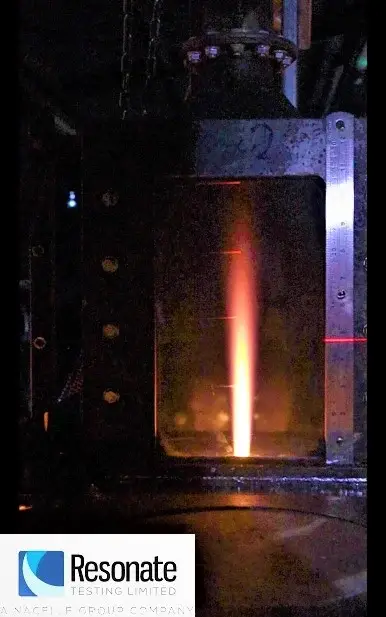
Resonate Testing provides engineer-led materials flammability testing for automotive, electrical, electronic and other product applications. Testing assesses how plastics, polymers, films, foams, vehicle interior materials and other components respond to defined ignition and flame exposure conditions, including horizontal and vertical burning behaviour, burn rate, flame propagation, afterflame, afterglow and self-extinguishing characteristics.
Programmes can be planned against recognised materials flammability standards including UL 94, IEC 60695-11-10, ISO 3795 and customer or OEM-specific requirements. Depending on the material and application, additional methods including ISO 1210 and ASTM D635 may also be relevant. The applicable standard, edition, required classification and accreditation status are reviewed before the programme is confirmed.
Testing is planned around the submitted material and agreed method, with specimen construction, dimensions, thickness, exposed face, conditioning and acceptance criteria reviewed before testing. This supports material development, comparison, qualification and compliance programmes by providing controlled evidence of flammability performance against the requirements defined for the product and its intended application.
| Specification | Capability |
|---|---|
| UL 94; IEC 60695-11-10 ---- Plastics and polymeric materials Plastics, polymers, films, foams and electrotechnical materials | Horizontal and vertical burning behaviour, afterflame, afterglow, flaming drips and self-extinguishing characteristics |
| ISO 3795 ---- Vehicle interior materials | Horizontal burning behaviour and burning rate under the specified conditions |
| BS 5852, Crib 5 ---- Upholstery assemblies | Flaming ignition and progressive smouldering of the submitted build-up |
| ISO 11925-2 ---- Construction products | Ignitability under direct small-flame exposure to the surface or edge |
| Customer-specific programmes | Method-specific ignition response, flame propagation, burn characteristics and acceptance criteria |
| Specification review and test planning | Review of sample construction, exposed face, conditioning, quantities, pass/fail criteria, witness requirements and reporting expectations before quotation. |
Resonate provides an engineer-led route from requirement and specimen review through testing, assessment and reporting, generating evidence aligned with development, qualification or certification objectives.
A separate material submission record may be needed for each change in material type or thickness.
Deliverables are agreed before the campaign and may include:
Flaming that continues after the ignition source is removed.
Glowing combustion that continues after flaming has stopped or the ignition source is removed.
Important specimen details include dimensions, thickness, construction, exposed face, conditioning, joints or seams where relevant, and the intended aircraft installation.
The distance a flame front travels over a defined period under the specified test conditions.
Burning droplets or particles released by a specimen during testing.
A specimen’s response when exposed to the ignition source defined by the test method.
Smouldering combustion that continues to spread through a material or assembly.
The specimen stops burning within the conditions and time limits defined by the method.
The surface or edge presented to the ignition source during the test.
Flammability testing evaluates how a material, component or product responds when exposed to a defined ignition source or flame under controlled conditions. Depending on the applicable method, the assessment can examine whether the specimen ignites, how burning develops, horizontal or vertical burning behaviour, burning rate, afterflame, afterglow, flaming drips, progressive smouldering, self-extinguishing behaviour or the extent of burning. The appropriate method depends on the material, intended end use, specimen construction and programme or regulatory objective.
The appropriate method depends on the material or product, its intended end use, specimen construction and the programme or regulatory objective. If you are unsure, send the available drawing, material description, construction details and requirement for engineer review rather than selecting a method by test name alone.
No. An initial review can start with the product or material information you already have. If a standard or customer specification is known, include its reference, edition and any defined acceptance criteria so these can be considered when the test route is reviewed.
Useful information includes the material or part description, drawings or data sheets, dimensions and thickness, exposed face, backing materials, coatings, adhesives, joints or seams, intended installation, sample quantity, applicable standard and acceptance criteria. The programme objective and required reporting outputs should also be identified where known.
The assessment is defined by the selected method. Depending on the requirement, observations can include ignitability, horizontal or vertical burning behaviour, burning rate, afterflame, afterglow, flaming drips, progressive smouldering, self-extinguishing behaviour or the extent of burning.
Yes, where the applicable method is intended for an assembly. For example, BS 5852 Crib 5 assessment can apply to complete upholstery composites and assemblies. Cover fabrics, fillings, interliners, seams, joints and other construction details can influence the submitted build-up and should be identified during technical review.
Flammability programmes can be planned against applicable UL, IEC, BS, ISO, FAA, EASA and customer requirements, subject to technical review. Methods referenced on this page include UL 94, IEC 60695-11-10, BS 5852 Crib 5, ISO 3795 and ISO 11925-2. The applicable standard, edition and scope should be confirmed before testing begins.
Resonate Testing operates as a UKAS-accredited laboratory to ISO/IEC 17025:2017. Accreditation is method-specific, so the accredited status of the requested flammability activity should be checked against the current UKAS schedule and confirmed in the quotation.
Deliverables are agreed before the campaign. Depending on the agreed scope, they may include identification of the test method and edition, specimen configuration and conditioning, recorded observations and measured results, photographic evidence, assessment against agreed criteria, documented deviations or limitations, and a formal report or customer data pack.
Yes. Test programmes can support development screening, qualification and formal compliance or certification objectives. Defining the purpose of the campaign at the outset helps align the selected method, specimen preparation, acceptance criteria and reporting evidence with the programme need.
Send the standard and edition, material details, drawings, specimen dimensions, quantity and required acceptance criteria. An engineer will review method suitability, sample preparation and reporting needs before confirming the test plan.
Whether you’re looking to contact us for the first time or have another testing requirement, we’d love to hear from you.