
© 2026 ResonateTesting Ltd.
Accredited
Scope Available
Programmes
Plus Certified
Expertise
Test Evidence
A spacecraft battery can perform correctly during initial characterisation or qualification testing and still fail to deliver sufficient energy at the end of its mission. Battery performance changes with storage time, charge-discharge cycling, temperature, state of charge, depth of discharge, current demand and previous operating history.
Battery ageing and life testing exist to make these changes measurable and sufficiently predictable. The testing provides evidence that supports battery sizing, operating limits, qualification, verification closure and end-of-life performance assessment.
Within the ECSS framework, battery life assessment is not a single prescribed test. It is a controlled programme that can include calendar ageing, constant depth-of-discharge cycling, constant depth-of-discharged-energy cycling, representative mission profiles, real-time testing, accelerated testing and wear-out testing.
Engineers should care because beginning-of-life performance alone is not adequate evidence for a long-duration mission. A battery may retain its voltage while losing usable energy. It may meet a capacity requirement but develop increased internal resistance that restricts peak-power delivery. A poorly designed accelerated test may also produce rapid results that do not represent the flight degradation mechanism.
Battery ageing assessment therefore seeks to answer five critical questions:
How quickly will capacity and energy reduce?
How much will internal resistance increase?
How much usable energy will remain at end-of-life?
Will the battery continue to meet spacecraft requirements?
Can the degradation prediction be defended with traceable evidence?
Battery ageing is the permanent change in battery characteristics and performance caused by repeated use or the passage of time. Typical changes include loss of capacity and energy and an increase in internal resistance.
Battery life testing is the planned use of controlled storage, cycling, characterisation and analysis to determine how these changes develop under defined conditions.
The principal ageing categories are:
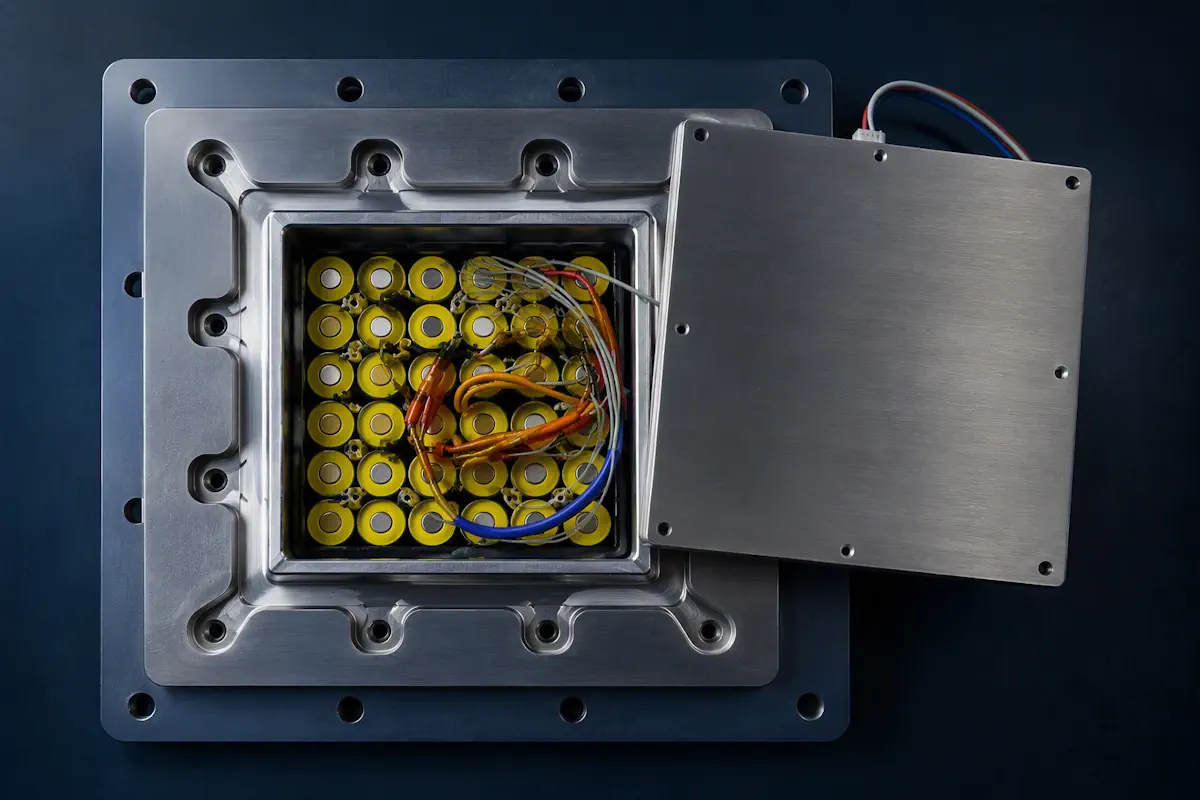
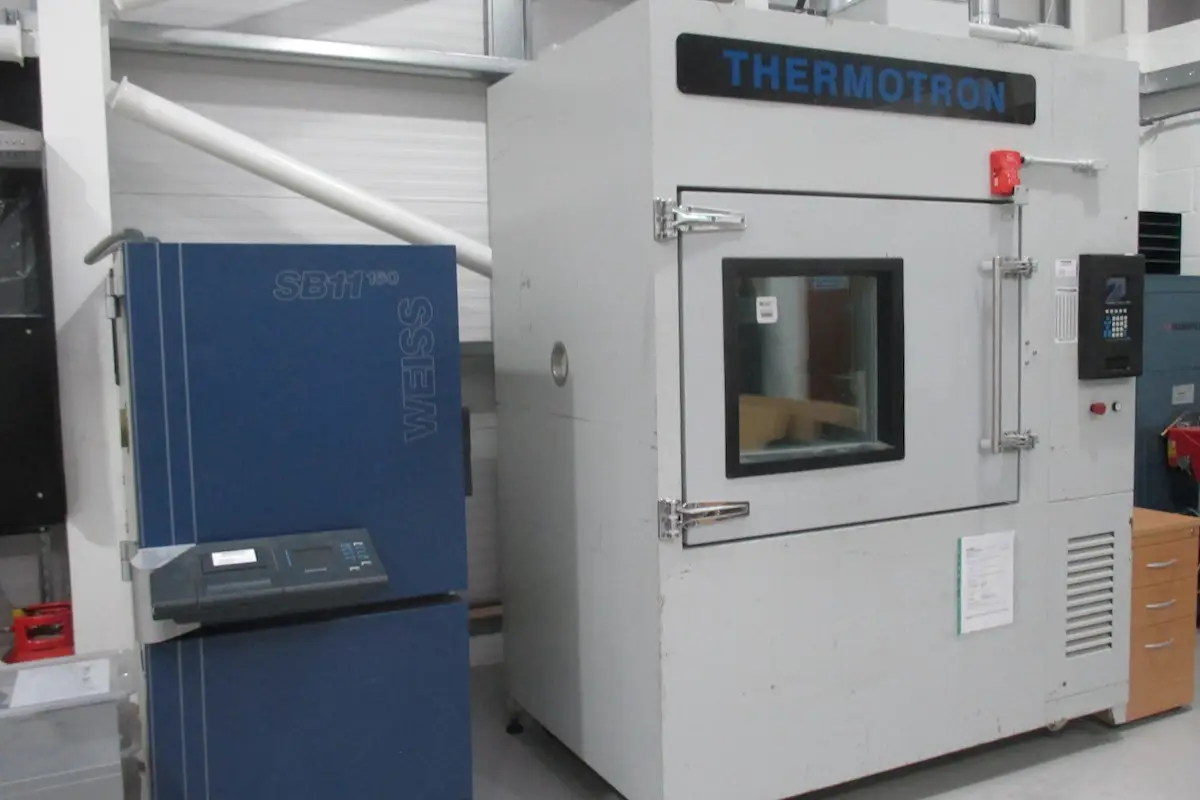

Calendar ageing is degradation associated with time after cell activation. It can occur even when the battery is not being cycled.
Calendar ageing is influenced by:
Storage temperature.
State of charge.
Storage duration.
Cell chemistry and construction.
Manufacturing history.
Previous electrical and environmental exposure.
Cycle ageing is gradual and irreversible degradation caused by repeated charging and discharging.
Cycle ageing is influenced by:
Charge and discharge rates.
Depth of discharge.
Depth of discharged energy.
End-of-charge voltage.
End-of-discharge voltage.
Temperature.
Rest periods.
Mission duty cycle.
Ripple and micro-cycling.
Total cycle count.
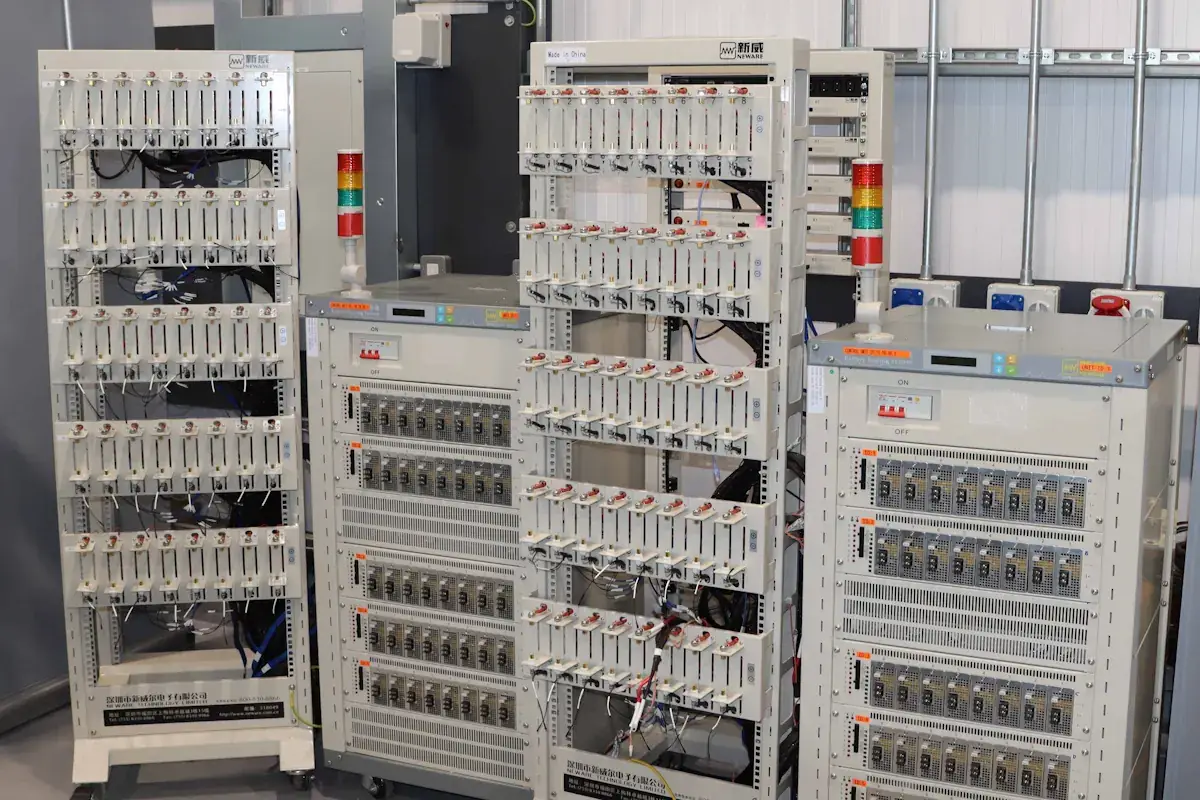
The engineering purpose of life testing is to establish long-term performance and derive degradation factors for battery sizing and performance calculations.
The programme should provide evidence concerning:
Capacity retention.
Energy retention.
Internal-resistance growth.
Rate capability.
Temperature behaviour.
Cell-to-cell divergence.
End-of-life energy availability.
Technology limitations.
Lot consistency.
Confidence in the selected ageing model.
Resonate testing provides high quality fire, mechanical, and environmental test solutions and certification services across a wide range of industrial sectors. From Primes to SME’s, Resonate Testing provides a bespoke and tailored service to our clients.
Initial capacity does not prove long-term capability. Life testing reduces the risk of discovering too late that the battery cannot provide the required energy or power.
It helps expose risks including:
Excessive capacity fade.
Reduced energy retention.
Increasing internal resistance.
Poor low-temperature performance.
Cell imbalance.
Voltage divergence.
Unexpected calendar loss.
Unrepresentative supplier data.
Inadequate margin at end-of-life.
Changes between manufacturing lots.
Confidence depends on more than completing a cycle count. The evidence must show:
Which test article was used.
How representative it was.
Which mission conditions were simulated.
Which parameters were controlled.
Which measurements were recorded.
How the data were processed.
How anomalies were handled.
Which model was used for extrapolation.
Which assumptions and limitations remain.
Space missions can extend for years. Small errors in estimated degradation can become significant power shortfalls later in the mission.
Representative life testing supports:
End-of-life capacity prediction.
End-of-life energy prediction.
Battery-sizing margins.
Power-budget confidence.
Operational-limit definition.
Mission-profile assessment.
Contingency planning.
Flight-readiness decisions.
ECSS-E-HB-20-02A provides guidance on lithium-ion battery characterisation and life testing. It is a handbook, not a stand-alone mandatory qualification standard.
Applicable obligations arise from the project requirement baseline, contract, customer specification and invoked ECSS standards. The handbook supports those requirements by describing recognised test approaches and documentation practices.
Documents that can be relevant include:
ECSS-E-HB-20-02A: Lithium-ion battery testing guidance.
ECSS-E-ST-10-02: Verification planning, control and evidence.
ECSS-E-ST-10-03: Test planning, specifications, procedures and test execution.
ECSS-E-ST-20: Electrical and electronic engineering requirements.
ECSS-Q-ST-20-08: Storage, handling and transportation of space hardware.
ECSS-S-ST-00: ECSS system application and customer-supplier relationships.
ECSS-S-ST-00-02: Tailoring of ECSS standards and requirements, where applicable to the controlled project baseline.
Only documents genuinely applicable to the project should be listed in the compliance baseline. An ECSS document should not be added simply because its title appears relevant.
ECSS handbooks provide guidance, recommendations, good practice and supporting information. They do not automatically impose requirements.
ECSS-E-HB-20-02A can inform the test strategy. The controlling obligations remain those invoked through the project requirements and business agreement.
Battery life testing should be tailored according to:
Mission orbit.
Mission duration.
Eclipse profile.
Power-demand profile.
Thermal environment.
Cell chemistry.
Cell construction.
Battery architecture.
State-of-charge limits.
Charge and discharge rates.
Depth of discharge.
End-of-life requirements.
Qualification or protoflight philosophy.
Available heritage.
Supplier data.
Test-item availability.
Customer and launch-provider requirements.
Tailoring does not mean removing difficult or expensive activities without justification. Each inclusion, modification or deletion should have a documented technical basis and the required approval.
Customer requirements can supplement, modify or exceed the handbook guidance.
The agreed position should be established through controlled documents such as:
Project requirements.
ECSS applicability or compliance matrices.
Verification plan.
Verification control document.
Battery test plan.
Test specification.
Approved test procedure.
The title of the handbook is not a substitute for this requirements work.
Establish the applicable requirement baseline.
Define the mission and operating profile.
Identify the verification objective.
Define the required end-of-life performance.
Select the test article level.
Establish sample quantities.
Identify heritage and supplier evidence.
Select calendar, cycle, mission-profile, accelerated or real-time testing.
Define success, failure and termination criteria.
Establish the analysis and prediction method.
Approve the test plan and test procedure.
Confirm cell lot and test-item configuration.
Record activation, storage and previous test history.
Confirm state of charge.
Verify electrical and thermal interfaces.
Confirm instrumentation ranges and accuracy.
Confirm calibration status.
Define sensor positions.
Confirm data-acquisition rates.
Review test hazards.
Complete the test readiness review.
Perform beginning-of-test characterisation.
Apply the approved storage or cycling conditions.
Control temperature and electrical limits.
Record voltage, current and temperature.
Conduct periodic capacity and resistance checks.
Retain raw time-history data.
Record interruptions and anomalies.
Prevent uncontrolled changes to the test configuration.
Compare results with the approved criteria.
Review capacity and energy trends.
Assess resistance growth.
Examine cell imbalance and voltage divergence.
Evaluate anomalous behaviour.
Confirm whether the degradation mechanism remains representative.
Assess whether acceleration assumptions remain valid.
Determine whether retesting or additional testing is justified.
Issue the controlled test report.
Include the test configuration and conditions.
Provide raw and processed data.
Document the analysis method.
Record nonconformances and dispositions.
State limitations and unresolved matters.
Update the verification evidence.
Record the relationship between test results and end-of-life predictions.
Calendar ageing testing evaluates irreversible performance loss caused by storage and the passage of time.
A suitable programme can include cells stored at different:
Temperatures.
States of charge.
Storage durations.
Periodic characterisation can measure:
Capacity.
Energy.
Internal resistance.
Open-circuit voltage.
Rate capability.
Physical condition.
Results should be compared with beginning-of-life values and assessed as trends rather than isolated measurements.
Calendar ageing matters because cells and batteries can spend significant periods:
In supplier storage.
During manufacture.
During spacecraft integration.
Awaiting launch.
In ground-hold conditions.
In low-use mission phases.
The handbook does not prescribe universal calendar-loss limits. Acceptance criteria must be derived from mission and project requirements.
Cycle ageing testing measures degradation caused by repeated charging and discharging.
Controlled parameters can include:
Temperature.
Charge current.
Discharge current.
End-of-charge voltage.
End-of-discharge voltage.
Depth of discharge.
Depth of discharged energy.
Rest periods.
Cycle duration.
Electrical ripple.
Capacity-check intervals.
Cycle testing should include consistent characterisation methods. A capacity or resistance result is of limited value if the measurement conditions change between test stages.
The cell or battery is repeatedly cycled to a specified depth of discharge under controlled temperature and electrical conditions.
The activity can include:
Charging at a specified current and method.
Reaching the defined end-of-charge voltage.
Discharging to the required depth of discharge.
Repeating the cycle.
Performing capacity checks at approved intervals.
Monitoring degradation against the test baseline.
This approach controls the energy removed during each cycle rather than only the electrical charge.
It can be useful where mission performance is better represented by usable energy than by ampere-hour capacity alone.
Geostationary Earth Orbit battery testing typically considers seasonal eclipse operation and long mission duration.
The handbook discusses a representative GEO profile using periods of eclipse cycling and solstice operation. Parameters can include:
Representative battery temperature.
Charge method.
Charge current.
End-of-charge voltage.
Discharge current or power.
Eclipse duration.
Capacity-check frequency.
Solstice conditions.
Additional propulsion-related demand where applicable.
The handbook presents a 45-eclipse example, including a longest representative eclipse of 72 minutes. This is guidance, not a universal qualification profile.
The actual test should be based on the spacecraft mission.
Low Earth Orbit missions commonly expose batteries to a much larger number of repeated charge-discharge cycles.
The handbook provides a generic real-time example of a 90-minute cycle comprising:
Approximately 60 minutes of charge.
Approximately 30 minutes of discharge.
This example is not a mandatory LEO profile. Actual missions differ in orbit, eclipse duration, load, thermal environment, charge strategy and operational mode.
A representative LEO programme should consider:
Flight temperature profile.
Charge-current profile.
Constant-current or constant-power discharge.
Electrical ripple.
Depth of discharge.
Capacity-check intervals.
Expected total cycle count.
End-of-life operating requirements.
Accelerated testing is intended to generate long-term degradation information within a practical programme period.
Possible acceleration methods include:
Shortening inactive periods.
Increasing charge rates.
Increasing discharge rates.
Increasing test temperature.
Modifying cycle timing.
The central technical risk is false acceleration.
Higher temperature or current can change the degradation mechanism rather than simply make the flight mechanism occur faster. A rapid result is not useful if it represents a condition the flight battery will never experience.
Acceleration should therefore be:
Technically justified.
Related to a defined degradation model.
Correlated with representative conditions.
Limited to prevent unrealistic over-stress.
Reviewed during the test.
Documented with assumptions and uncertainty.
Real-time testing uses mission-representative charge and discharge profiles without artificial acceleration.
Its strengths include:
High representativeness.
Reduced dependence on acceleration assumptions.
Direct observation of cycle and calendar effects.
Stronger confidence in long-term trends.
Its limitations include:
Long duration.
High cost.
Extended equipment occupancy.
Greater exposure to test interruptions.
Possible conflict with programme decision dates.
Real-time testing is not automatically superior. It provides stronger representativeness but can deliver evidence too late to support programme decisions. The appropriate balance must be determined through verification planning.
Wear-out tests are shorter-duration life tests used to assess cell-lot performance and identify changes associated with materials or manufacturing processes.
A wear-out programme can include:
Representative samples from each relevant lot.
Controlled accelerated conditions.
Periodic characterisation.
Comparison with historical performance.
Defined alert and rejection criteria.
Trend analysis across lots.
Wear-out testing is associated with lot acceptance. It does not replace full qualification or mission life testing.
The analysis should extend beyond a simple pass or fail statement.
Relevant outputs can include:
Capacity-loss rate.
Energy-loss rate.
Resistance-growth rate.
Temperature trends.
Voltage divergence.
Cell imbalance.
Cycle-to-cycle variation.
Calendar-versus-cycle contribution.
Model fit.
Prediction uncertainty.
End-of-life margin.
Sensitivity to mission assumptions.
Measured evidence, calculated values, engineering interpretation and unverified assumptions should be clearly separated.
The test article may not represent the flight hardware. Cell-level evidence does not automatically account for battery-level restraint, thermal coupling, electrical interconnection, cell imbalance or protective devices.
Life testing can take months or years. Late programme initiation can leave insufficient time to establish meaningful trends before a qualification or flight-readiness decision.
Long-duration testing consumes equipment, instrumentation, engineering support and test articles. Poor initial planning can create expensive data that do not answer the verification question.
A technically successful test may still fail to close verification if:
The governing requirement is unclear.
The test item is not representative.
Acceptance criteria were not approved.
The mission profile was not controlled.
The analysis method was selected after testing.
The evidence cannot be traced to the requirement.
Missing raw data, calibration records, state-of-charge history, sensor positions, cell-lot information or anomaly dispositions can undermine otherwise useful results.
An apparently accurate model may be based on insufficient data, a narrow test range or unproven assumptions.
Model precision should not be confused with prediction confidence.
Excessive temperature, current or depth of discharge may introduce degradation that is not representative of the mission.
Power loss, chamber faults, instrumentation drift, data gaps or uncontrolled rest periods can affect long-duration test validity.
Rules for interruption, recovery and continued testing should be defined before execution.
Record:
Cell manufacturer and type.
Manufacturing lot.
Activation date.
Test-item serial number.
Module or battery arrangement.
Electrical interfaces.
Thermal configuration.
Firmware where relevant.
Instrumentation.
Test-equipment configuration.
Every test objective, condition and pass criterion should connect to an approved requirement or documented engineering objective.
Maintain records of:
Storage duration.
Storage temperature.
State of charge.
Previous cycling.
Previous environmental testing.
Conditioning.
Transport.
Anomalies.
Maintenance activity.
Capacity, energy and resistance measurements should use controlled and repeatable conditions. Otherwise, changes in the measurement method can be mistaken for changes in the battery.
Generic profiles should not replace actual mission data where orbit, thermal control, duty cycle or load materially affect degradation.
Retain raw time-history data alongside processed plots, summaries and conclusions.
Establish how the team will handle:
Limit exceedances.
Power interruptions.
Sensor failures.
Chamber faults.
Missed cycles.
Unexpected battery behaviour.
Test pauses.
Restart conditions.
Do not assume that an acceleration model remains valid simply because it was accepted at test readiness.
Review degradation trends for evidence that the ageing mechanism has changed.
Independent review should challenge:
Mission assumptions.
Test representativeness.
Sample quantities.
Configuration.
Instrumentation.
Acceleration logic.
Prediction uncertainty.
Verification claims.
Clearly distinguish:
Measured results.
Calculated values.
Model outputs.
Engineering judgement.
Assumptions.
Limitations.
Support customers in translating mission, battery and verification requirements into a controlled test strategy.
Review:
Test objectives.
Mission profiles.
Test-item configurations.
Instrumentation.
Data requirements.
Characterisation intervals.
Environmental conditions.
Evidence expectations.
Support the development of coordinated environmental and battery test campaigns where the required capability, equipment and safety assessment permit.
Support the preparation or review of:
Test plans.
Test specifications.
Test procedures.
Test set-up records.
Test reports.
Data packages.
Nonconformance evidence.
Provide an independent challenge of test readiness, configuration, requirement traceability, acceleration assumptions and evidence quality.
Generate controlled test evidence for customer assessment within the wider qualification and flight-readiness process.
Resonate Testing should not state that it:
Certifies a battery as ECSS compliant.
Grants flight approval.
Replaces the design authority.
Defines the complete project requirements baseline.
Guarantees mission life.
Provides every life or battery test described by ECSS.
Validates an ageing model without adequate evidence.
The defensible position is:
Resonate Testing helps customers convert mission and verification requirements into controlled, traceable test evidence.
Your Test Facilitator. Not simply a test facility.
Use the contact route to share the requirement, test profile, drawings or specification for review.
Whether you’re looking to contact us for the first time or have another testing requirement, we’d love to hear from you.