
© 2026 ResonateTesting Ltd.
The Requirement That Did Not Disappear – Fluid Exposure Before Fire Testing: Why Conditioning Matters
A wording change between editions of a fire-test standard does not, by itself, prove that the underlying engineering concern has disappeared.
If exposure to hydraulic fluid, fuel, lubricant, cleaner or another service chemical can alter the condition of a cable, seal, hose, coating, insulation system or hydraulic component before a fire occurs, that exposure may remain relevant to the evidence generated by the fire test.
The correct question is not:
Does the latest edition explicitly repeat every historical conditioning step?
The correct question is:
Could representative service exposure influence the behaviour being assessed during the fire event?
Where the answer is yes, fluid conditioning and test sequencing deserve consideration, and addressing within the qualification strategy.
Aircraft components do not normally enter a fire event as pristine laboratory specimens.
Before a fire occurs, an installed component may have accumulated exposure to:
hydraulic fluids;
fuels;
lubricants;
cleaning chemicals;
de-icing fluids;
moisture;
contamination;
maintenance compounds;
pressure cycling;
vibration;
temperature variation; and
operational ageing.
Earlier qualification approaches sometimes incorporated defined exposure or conditioning before fire testing because the condition of the specimen could influence its subsequent fire behaviour, especially if the liquid is absorbed into the part, or chemically reactant with it.
The purpose was not to add testing for its own sake.
It was to ensure that the test article represented the condition expected in service closely enough to answer the intended qualification question.
That principle remains technically relevant even where the structure or wording of a standard has changed.
Standards change for many reasons.
Requirements may be:
restructured;
simplified;
harmonised;
transferred into supporting documents;
incorporated into programme-specific procedures;
replaced by installation-dependent tailoring; or
removed because the standard’s scope has changed.
It is therefore unsafe to rely on the following assumption:
“The wording disappeared, so the engineering effect no longer matters.”
The removal or revision of a sentence does not demonstrate that fluid exposure can no longer alter materials, leakage behaviour, electrical performance or post-fire condition.
Equally, the historical presence of a conditioning requirement does not prove that the same conditioning must be applied to every modern qualification programme.
Both absolute positions are weak.
The defensible approach is to establish:
the applicable certification basis;
the governing standard and edition;
the customer or design-authority procedure;
the intended aircraft installation;
the credible pre-fire service exposures;
the failure mechanism being assessed; and
whether prior fluid exposure could materially affect the measured outcome.

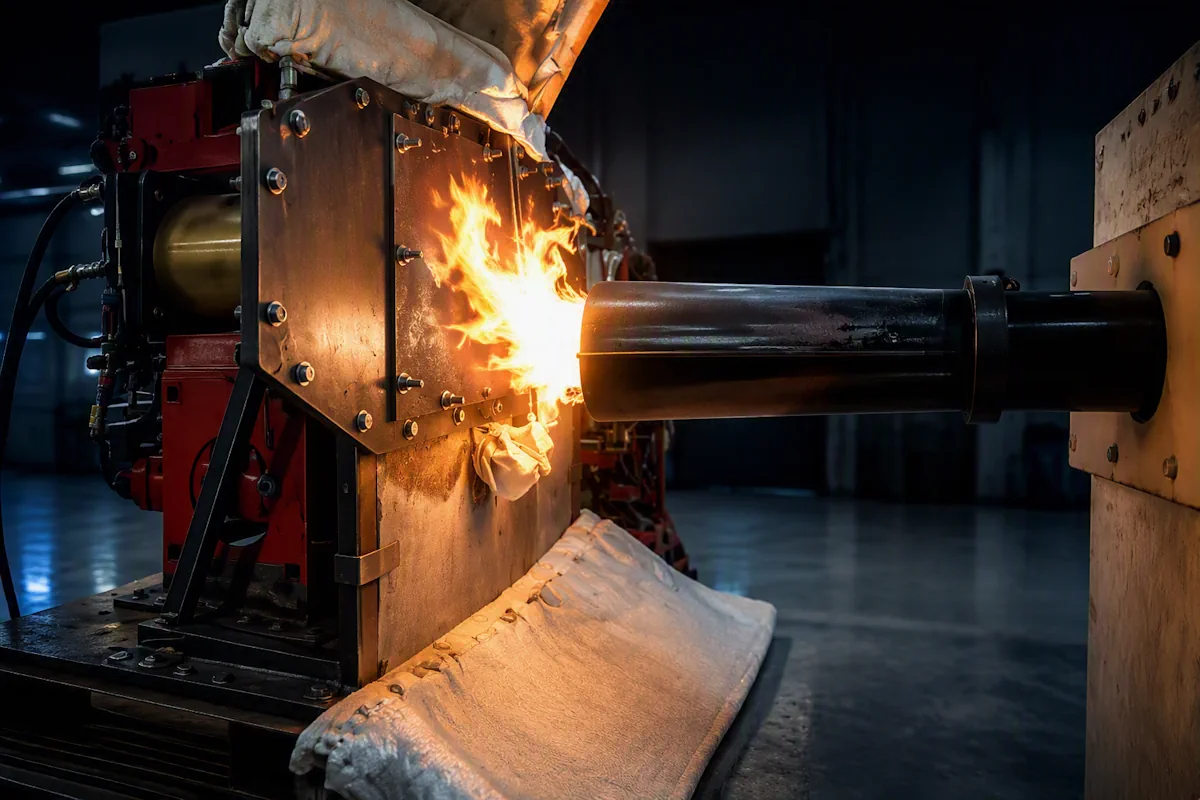
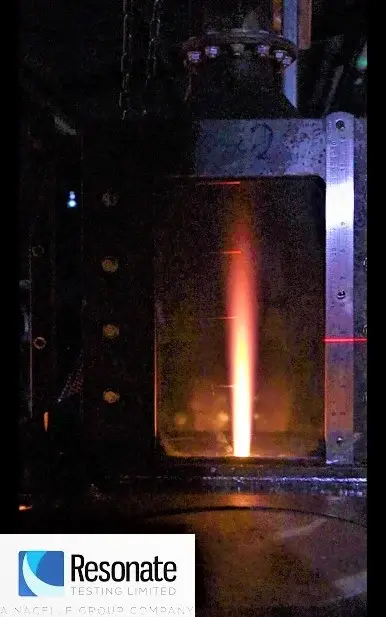

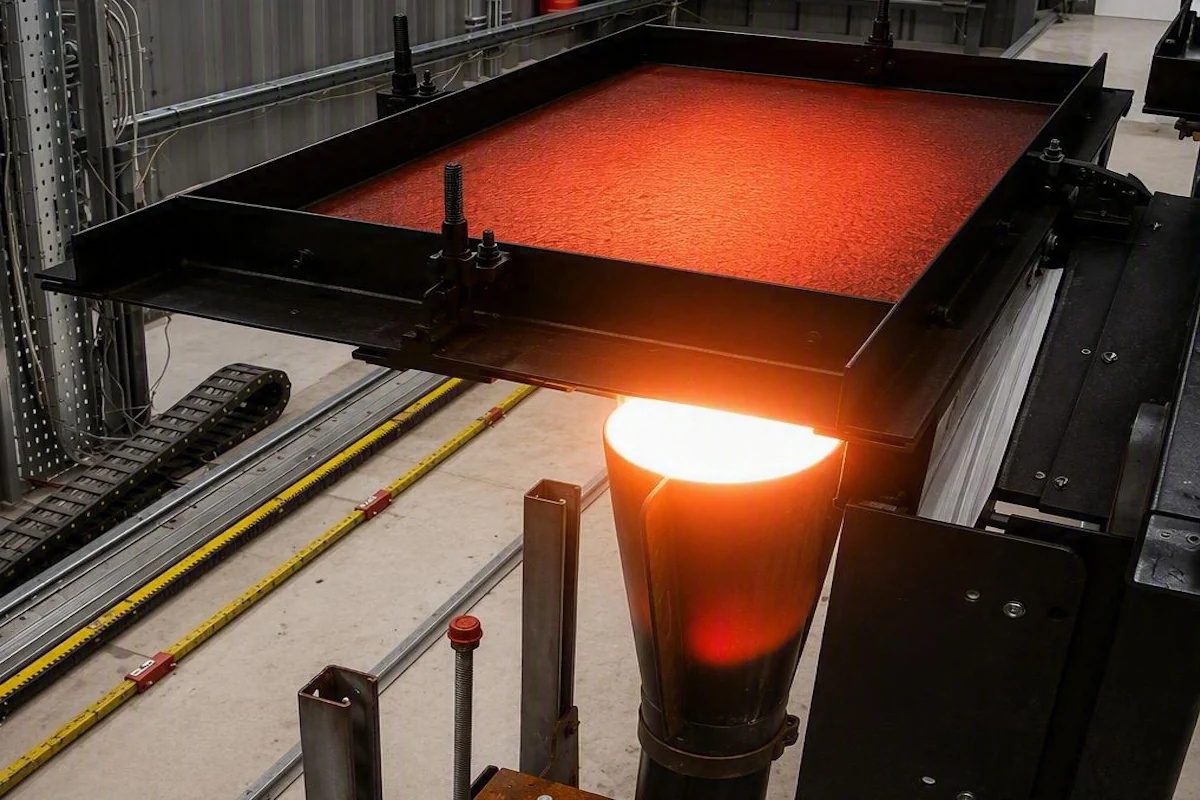
Aircraft systems experience a sequence of environments across their service lives.
A hydraulic hose may experience the following before it is exposed to a fire:
internal pressure, pressure cycling, vibration, thermal cycling, external fluid contamination, maintenance handling, ageing and installation stress
. A wiring assembly may encounter:
hydraulic-fluid contamination, fuel, cleaning chemicals, moisture, abrasion, connector disturbance, insulation damage; or installation-related degradation
Testing an unconditioned specimen may therefore answer a different question from testing a service-conditioned specimen.
Neither result is automatically invalid. However, the programme must state clearly which condition has been represented and what conclusion the evidence supports. In the specific case of wire testing many of the standards require pre condition with fuel and engine oil
| Test Article Condition | Question Principally Added |
|---|---|
| New and Conditioned | How does the as-manufactured item behave under the defined fire exposure? |
| Fluid Conditioned | How does the item behave after the defined chemical exposure and recovery sequence? |
| Mechanically and environmentally conditioned | How does accumulated representative exposure affect fire performance? |
| Fully sequenced programme article | How does the specified combination and order of exposures affect the required outcome? |
The distinction matters because qualification evidence is only as representative as the assumptions used to create it.
Resonate testing provides high quality fire, mechanical, and environmental test solutions and certification services across a wide range of industrial sectors. From Primes to SME’s, Resonate Testing provides a bespoke and tailored service to our clients.
Fluid susceptibility testing evaluates whether materials, components, assemblies or equipment can tolerate contact with specified service fluids without unacceptable physical damage, degradation, contamination effects, safety concerns or loss of required performance.
Depending on the governing procedure, exposure may involve:
spray;
immersion;
partial immersion;
wipe;
drip;
splash; or
another defined contact route.
The resulting assessment may include:
swelling;
softening;
cracking;
corrosion;
coating change;
dimensional change;
mass change;
insulation resistance;
electrical operation;
leakage; and
functional performance.
RTCA DO-160 Section 11 is a clear example of the continuing recognition that representative aviation fluids can affect airborne equipment. It addresses fluid exposure as an environmental qualification concern and requires the specified procedure, fluid, exposure route, recovery and acceptance criteria to be understood together.
This does not mean that passing a fluid susceptibility test automatically proves subsequent fire performance.
It means that aerospace qualification continues to recognise fluid exposure as capable of changing the condition or functionality of equipment.
Hydraulic similarity is not the same as chemical equivalence.
A substitute fluid may reproduce selected physical properties such as:
pressure;
flow;
viscosity;
density; or
operating temperature
without reproducing:
material interaction;
seal response;
coating response;
leakage development;
contamination effects;
thermal decomposition behaviour; or
post-fire residue and condition.
This becomes particularly important for equipment exposed to phosphate ester hydraulic fluids such as Skydrol.
Skydrol is a phosphate ester fluid family. It is not a generic term for all synthetic aircraft hydraulic fluids. MIL-PRF-83282 and MIL-PRF-87257 fluids are synthetic hydrocarbon types with different chemistry, compatibility requirements and approvals.
Where a conditioning sequence is intended to represent actual service exposure, the programme should consider whether the specified service fluid is part of the required evidence.
The answer will not always be yes.
A substitute may be acceptable where:
the procedure permits it;
the relevant properties have been identified;
equivalence is technically justified;
the design authority approves the approach; and
the certification basis accepts the resulting evidence.
Convenience alone is not an equivalence argument.
Fluid susceptibility and fire testing are often managed as separate work packages.
Technically, they may form part of the same evidence chain.
Prior fluid exposure could influence:
seal condition;
hose condition;
insulation integrity;
coating adhesion;
adhesive performance;
polymer properties;
leakage initiation;
leakage rate;
electrical behaviour;
material retention; or
post-fire condition.
Whether any of these effects matter depends on the qualification objective.
The decision should not be based on the fact that exposure occurred before the fire. It should be based on whether that exposure could alter the result the fire test is intended to measure.
Key engineering test: If removing the conditioning step could change the specimen’s relevant pre-fire condition, the programme should justify its removal rather than assume irrelevance.
A representative fire test is not defined solely by burner temperature or flame duration.
The evidence may also depend on:
specimen conformity;
production-representative materials;
installation geometry;
mounting and restraint;
operating state;
internal pressure;
fluid type and condition;
electrical loading;
prior environmental exposure;
contamination state;
conditioning and recovery;
instrumentation;
fire exposure; and
acceptance criteria.
These elements form a sequence.
If a relevant exposure mechanism is removed, reordered or replaced, the test may answer a different engineering question.
| Stage | Evidence |
|---|---|
| Baseline Inspection | Was the specimen conforming and functional before exposure? |
| Fluid Conditioning | Was the required service-fluid exposure achieved? |
| Recovery or Cleaning | Was the defined interval and treatment reproduced? |
| Pre Fire Verification | What was the specimen’s condition immediately before fire exposure? |
| Fire Test | How did the conditioned specimen perform under the defined fire environment? |
| Post Fire Assessment | Did the item meet the specified functional, containment or integrity criteria? |
The sequence must be planned before testing begins. Attempting to reconstruct conditioning intent after the fire test weakens traceability.
Aircraft systems experience a sequence of environments across their service lives.
A hydraulic hose may experience the following before it is exposed to a fire:
internal pressure, pressure cycling, vibration, thermal cycling, external fluid contamination, maintenance handling, ageing and installation stress
. A wiring assembly may encounter:
hydraulic-fluid contamination, fuel, cleaning chemicals, moisture, abrasion, connector disturbance, insulation damage; or installation-related degradation

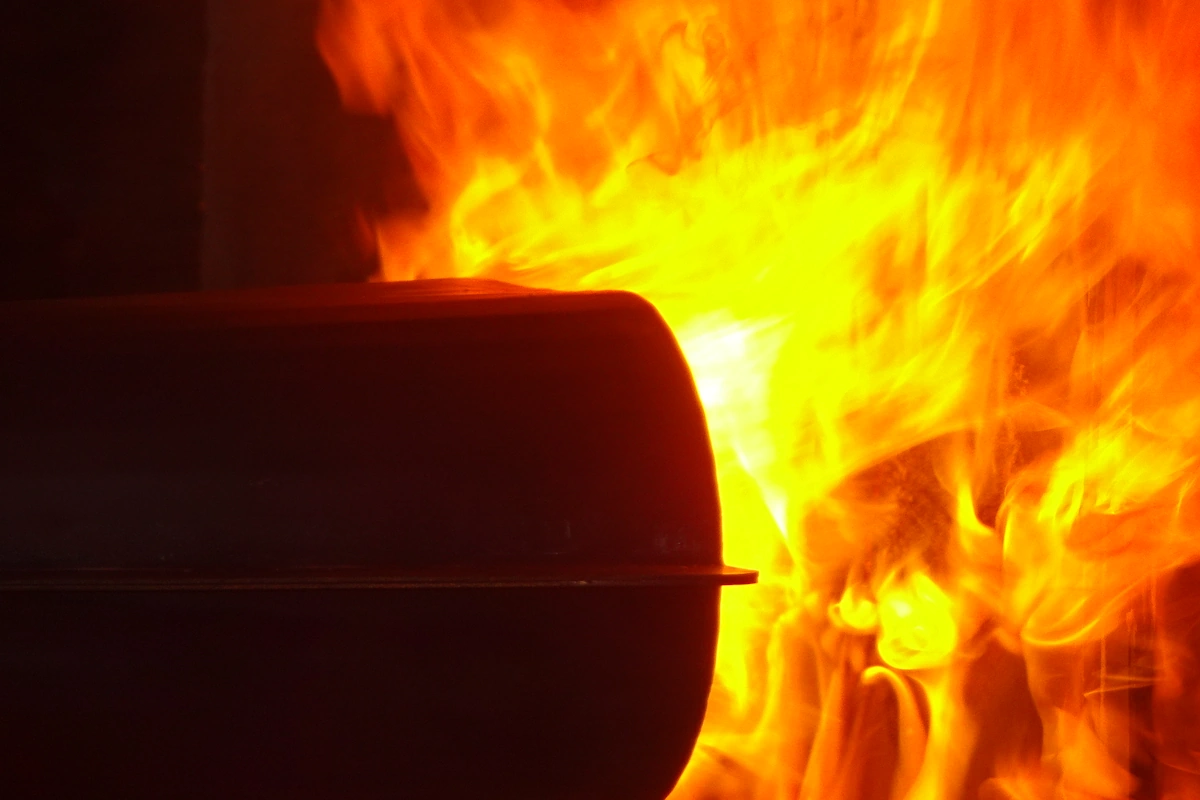
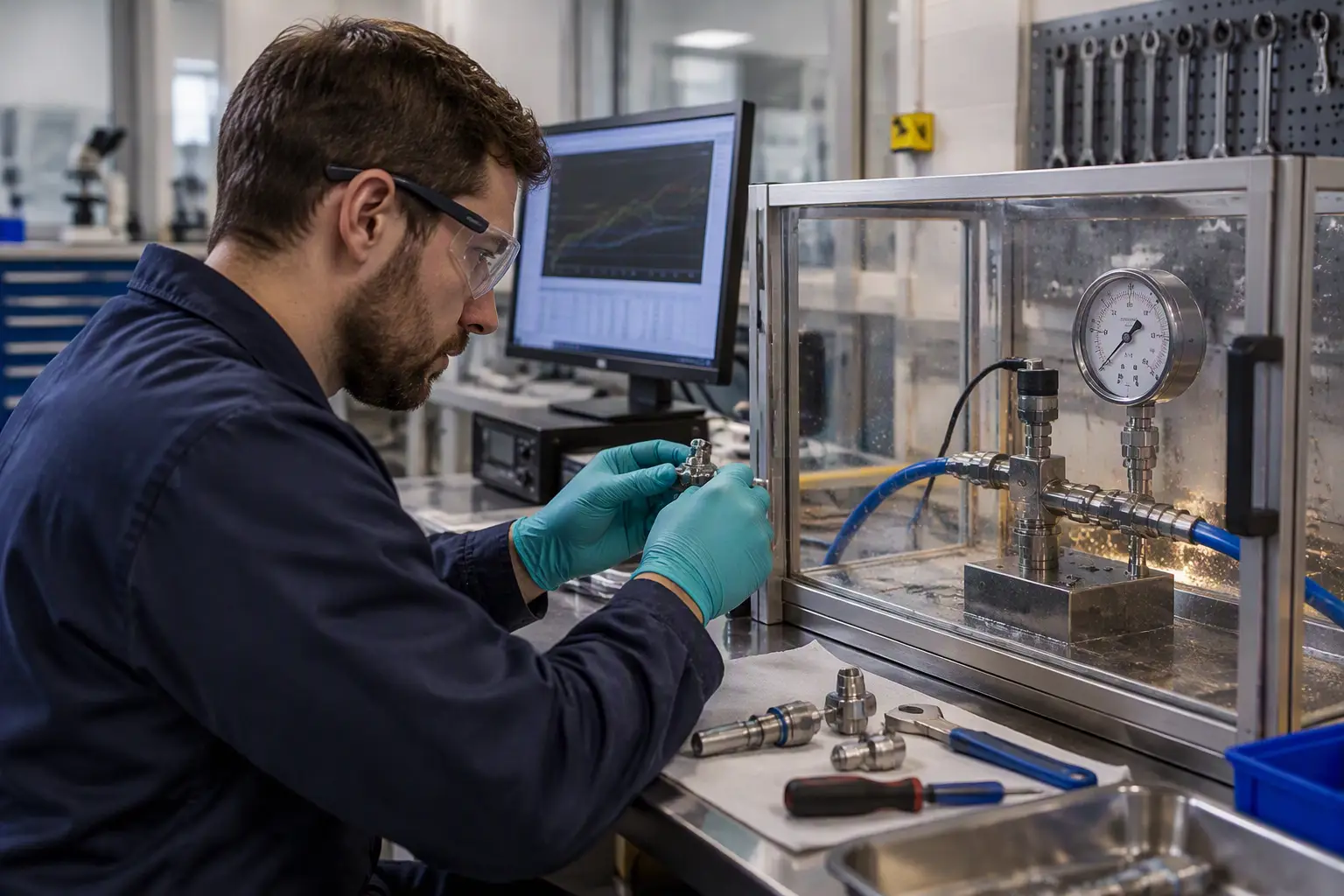
Fluid conditioning should not be added automatically.
The decision should be recorded.
A clear technical justification is stronger than either blindly repeating a historical procedure or omitting conditioning because it is inconvenient
Before deciding whether fluid conditioning belongs in the fire-test sequence, define the evidence objective.
What hazard is being assessed?
What equipment function, containment feature or material behaviour must be demonstrated?
What service exposures occur before the credible fire event?
Could those exposures alter the specimen’s material condition?
Could they affect leakage initiation or leakage rate?
Could they influence electrical performance or insulation integrity?
Could they change coating, adhesive, seal or hose behaviour?
Could they affect the post-fire condition being assessed?
Which standard, edition and customer procedure govern the programme?
Does the installation environment justify conditioning beyond the base standard?
Is the actual service fluid required?
If a substitute is proposed, which properties must be equivalent?
Who has authority to accept the conditioning and substitution rationale?
What baseline and post-conditioning evidence must be recorded?
Does the current accreditation scope cover each relevant activity?
These answers are more important than relying on the editorial history of one sentence within one standard.
Discussions about heated or decomposing hydraulic fluids sometimes extend to magnesium alloys, titanium alloys and hydrogen-related mechanisms.
These topics require direct evidence.
The internal sources reviewed for this page do not establish that:
hot Skydrol causes hydrogen embrittlement of titanium;
hot Skydrol causes hydrogen embrittlement of magnesium; or
boiling Skydrol follows a specific hydrogen-bearing decomposition route that directly produces either effect.
These may be legitimate subjects for specialist investigation. They should not be presented as demonstrated conclusions without suitable materials, chemical and metallurgical evidence.
A credible technical page must distinguish between:
| Evidence Category | Meaning |
|---|---|
| Observed Phenomenon | An effect has been directly recorded under defined conditions |
| Investigated concern | The mechanism has been examined but is not conclusively established |
| Plausible Mechanism | A technically possible explanation has been proposed |
| Demonstrated conclusion | Suitable evidence supports the stated cause-and-effect relationship |
Overstating an unverified mechanism would weaken the wider and more defensible argument for representative conditioning.
Resonate starts with the evidence question.
The engineering review considers:
the applicable standard and edition;
the customer qualification procedure;
the certification basis;
the intended installation;
the exact fluid and grade;
the exposure route;
exposure duration and temperature;
recovery and cleaning requirements;
test-article materials;
internal pressure, flow and temperature;
electrical or mechanical operation;
sequence dependencies;
fire-test configuration;
instrumentation;
acceptance criteria;
safety controls; and
the applicable accreditation position.
Where fluid conditioning and fire exposure form part of the same qualification objective, they should be planned as one controlled evidence sequence rather than treated as unrelated tests.
Capability must be confirmed for every project. Previous use of one fluid, component, pressure or fire-test arrangement does not automatically demonstrate suitability for another requirement.
Bring Resonate the governing standard, fluid grade, installation conditions, exposure sequence and acceptance criteria before fixing the test method.
Your Test Facilitator. Not simply a test facility.
Book fire testing with Resonate. Use the contact route to share the requirement, test profile, drawings or specification for review.
Whether you’re looking to contact us for the first time or have another testing requirement, we’d love to hear from you.